A welcoming kitchen needs personality, but every object competes with preparation space, appliances, cleaning, and movement. The best kitchen décor earns its place by adding warmth, organizing something useful, or improving light—without turning the counter into a display shelf.
Start With the Work Zones
Map the sink, stove, refrigerator, primary preparation area, coffee station, and appliance doors. Keep the busiest preparation zone completely clear. Décor belongs in corners, against backsplashes, or inside defined stations where it will not be moved every time you cook.
Photograph the room during a normal day. Items that repeatedly migrate or block a drawer are telling you that the arrangement is not working.
Contain Small Essentials
A tray or shallow basket can turn oil bottles, a candle, or coffee supplies into one visual unit. Containment also makes cleaning faster because the group moves as a single piece.
Choose a tray only slightly larger than its contents. An oversized tray can consume as much working room as scattered objects.
Choose Materials for a Working Room
Kitchen décor encounters grease, steam, splashes, crumbs, and frequent wiping. Favor glazed ceramic, sealed wood, metal, glass, washable textiles, and other finishes suited to regular care.
Keep porous or delicate pieces away from the sink and stove. Check heat guidance before placing anything near a cooktop or small appliance.
Use Textiles With Purpose
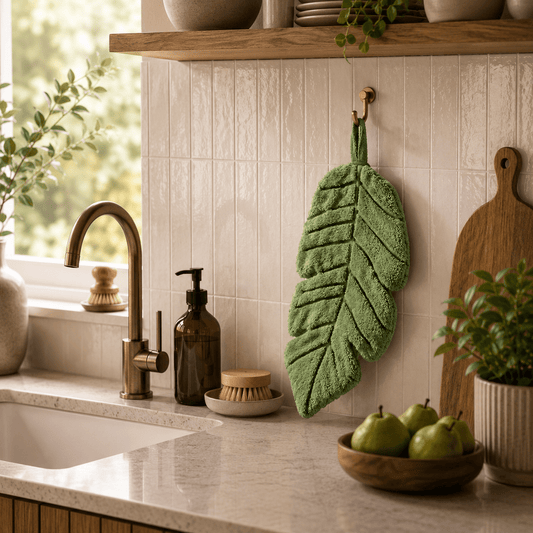
Hand towels, runners, and small washable mats can add color and texture without using counter space. Prioritize absorbency, laundering instructions, and secure placement.
Repeat one textile color in a vessel or wall accent to connect the room without matching every item.
Layer Functional Lighting
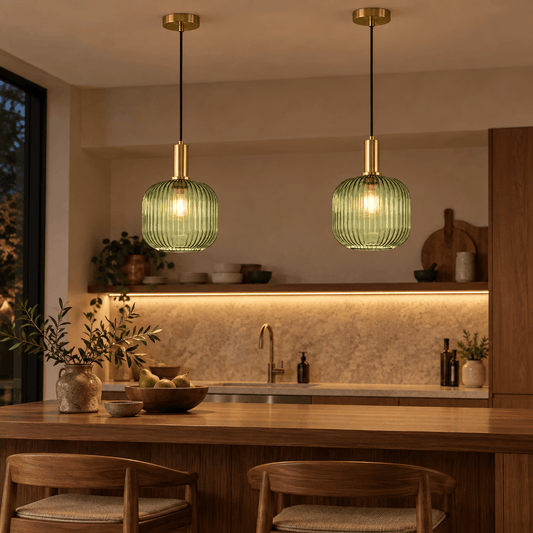
General ceiling light makes the room visible; task light improves counters and sinks; a modest accent source can soften the kitchen after active cooking ends. Keep bulb color reasonably consistent.
A small lamp can work on a dry, protected counter when the cord, shade, and base stay clear of water, heat, and food preparation.
Add Height Without Adding Clutter
Use one taller object—such as a slim vase, cutting-board grouping, or compact lamp—rather than several small pieces. Vertical décor draws the eye while preserving more horizontal space.
Wall art, a clock, or a hanging textile can add character when countertops are already busy, provided mounting is secure and appropriate for kitchen conditions.
Edit for Daily Maintenance
A styled kitchen should still be easy to wipe down. If an arrangement must be dismantled every day, reduce it. Keep only pieces that support the way the household actually cooks and cleans.
A well-decorated kitchen feels calm because the useful space remains visible.
Common Buying Mistakes
- Decorating the primary preparation zone.
- Placing absorbent or heat-sensitive pieces beside the stove or sink.
- Using many tiny objects instead of one contained grouping.
- Blocking outlets, appliance doors, ventilation, or cleaning access.
- Choosing textiles for appearance without checking washability.
Final Buying Checklist
- Map cooking, cleaning, and appliance zones.
- Measure the counter space that is genuinely available.
- Keep the main prep area clear.
- Group small essentials on a right-sized tray.
- Choose wipeable, kitchen-appropriate materials.
- Add textiles and lighting only where they are safe.
- Remove anything that complicates daily cleaning.
Ready to compare options? Explore Urban Alcove’s kitchen collection.