

A pet-friendly home can feel thoughtfully furnished, with ceramic dishes that belong in the kitchen, comfortable resting spots and fabrics you can maintain. The useful starting point is your pet’s routine: where they eat, sleep, shed, scratch and watch the world. Choose pieces that support those habits, then bring them together through color, shape and texture.
This guide is especially useful for homes with cats, with cleaning and protection ideas that also help dog owners. “Elevated” means considered design here, rather than a requirement to raise feeding bowls. A beautiful object still needs to fit your pet, your room and your cleaning routine.
Start With the Places Your Pet Already Chooses
Watch an ordinary day before buying. Does your cat sleep beside you, hide in a quiet corner or settle by a window? Do they scratch a sofa arm vertically or stretch along the rug? Does a dog bring muddy paws to one favorite seat? Those observations turn a broad shopping list into a few useful changes.
Map eating, drinking, resting and scratching spots without packing every resource into one decorative pet corner. Leave room to approach and walk away. In homes with several cats, provide choices in different places so one animal cannot block access to everything. A feeding station that looks tidy is less useful if it sits in a noisy passage.
Buy for the habit: Start with the mess or behavior that creates the most friction. A washable seat cover, a better-placed scratching post or an accessible bed may help more than replacing every furnishing.
Choose Ceramic Dishes for Style, Fit and Everyday Care
Glazed ceramic can make pet dishes feel like part of the room. Compare smooth food-contact surfaces, comfortable openings, a stable footprint and confirmed food-use suitability. Stainless steel is another practical material to consider. Plastic is light and convenient, but inspect worn or scratched pieces and replace them when needed. Material alone does not remove the need for regular washing.
Pick bowl depth around what your pet comfortably uses. A shallow plate offers easy access to food; a deeper bowl provides more liquid capacity. Watch the pet eating rather than treating a “whisker-friendly” label as a guaranteed solution. Ceramic can chip or break, so inspect rims and retire damaged pieces.
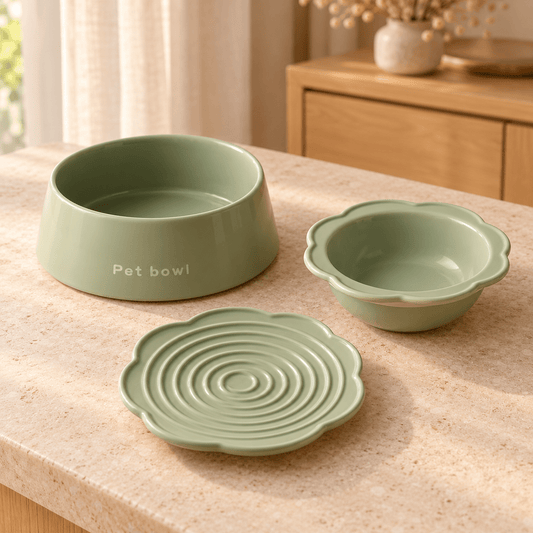
Petaline offers three coordinated food-grade ceramic pieces: a 650 ml large bowl, a 250 ml scalloped bowl and a 14.5 cm scalloped plate. They nest for storage and are sold as a complete set in Sage Green, Blush Pink or Butter Yellow. The ceramic pieces are dishwasher and microwave safe; check care guidance for the protective stacking rings separately. Stacking protection does not establish a nonslip base.
Place the dishes on a level surface and choose a feeding mat that is easy to wipe or wash. If protecting wood is important, verify the mat’s backing and water resistance. Food and water need not sit side by side simply because the dishes match; offer water away from food and litter. A coordinated set can look intentional across separate spots.
Compare Sofa Fabrics by Construction, Not Just Fiber
“Polyester,” “linen” and “performance” tell you only part of the story. Look at the actual weave, surface texture, seams, backing and cleaning instructions. As a practical starting point, smooth, densely constructed surfaces offer fewer exposed loops to catch than loose, open textures. That is a construction-based buying judgment, not a promise that a cat will ignore the fabric.
Request a swatch where possible. Check whether hair brushes away easily, whether the surface catches on jewelry and whether the color shows your pet’s coat. A subtle mid-tone pattern may make scattered hair less noticeable, but it still needs removing. Compare maintenance with the look you enjoy living with.
| Material or construction | Why consider it? | What to check |
|---|---|---|
| Dense microfiber or smooth tight weave | A practical starting point when avoiding loose loops. | Exact cleaning code, hair removal and snag behavior on a sample. |
| Performance upholstery | May offer documented stain or spill resistance. | The specific fabric’s claims, permitted cleaners and warranty exclusions. |
| Removable cotton or blended covers | Can make routine laundering more manageable. | Machine-wash permission, shrinkage, drying and replacement availability. |
| Leather or coated upholstery | A smooth surface can simplify loose-hair removal. | Claws can mark the finish; coatings may peel and cleaners can damage them. |
| Bouclé, loose weaves or heavily textured surfaces | Offer visual softness and texture. | Exposed loops and threads may snag; test carefully around an active scratcher. |
Ask what “pet-friendly” means for the exact fabric. Abrasion resistance, stain resistance, water resistance and claw resistance are different properties. A high abrasion rating is not a scratch-proof guarantee. Do not assume a removable cover can be machine washed, or that a performance fabric tolerates any cleaner.
Choose Rugs You Can Clean All the Way Through
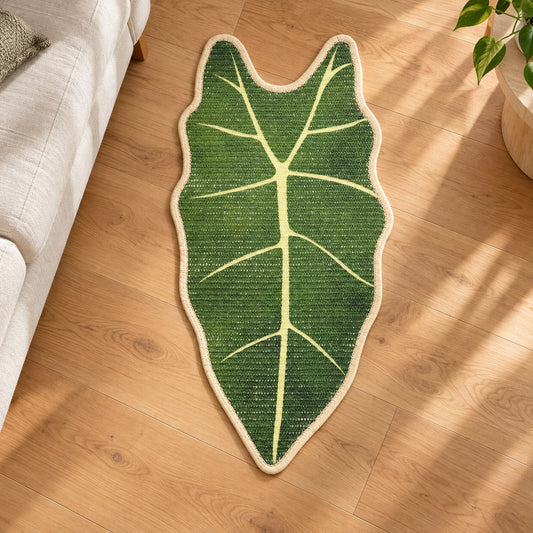
Compare low pile and smooth flat constructions when you want accessible everyday cleaning. Deep pile, long fringe and raised loops can add maintenance or tempt a particular cat. No construction is universally ignored: a flat rug may still become a favorite horizontal scratching surface.
“Washable” deserves a closer look. Can the whole rug be washed, or only a detachable top? Will the selected size fit your machine within its weight limit? What happens to the backing, and how must it dry? Check whether you can lift it, clean beneath it and keep the floor dry.
Natural-fiber rugs can be attractive, but read spill and cleaning guidance before choosing one for a feeding area or accident-prone spot. Do not assume a woven jute or sisal rug is washable. Use a compatible rug pad to help the rug stay in place, following floor and rug instructions. Loose edges should not obstruct your pet’s route.
Treat Odor Resistance as a Claim to Verify
Easy cleaning and odor resistance are related shopping concerns, not interchangeable claims. Ask whether odor resistance is stated for the particular fabric, what testing supports it and how care affects that property. A synthetic fiber or a stain-resistant finish does not, by itself, establish odor resistance.
For most homes, an achievable cleaning routine matters more than an impressive label. Remove hair regularly, wash permitted covers and bedding, address spills promptly and let items dry fully before reuse. For accidents, use a cleaner suitable for both the mess and the surface, following its directions and testing a hidden area. Avoid mixing cleaning products.
Look beneath a rug or into removable cushion layers when odor persists; cleaning the visible surface may leave an affected backing or filling untreated. Manufacturer-approved professional cleaning may be appropriate. A room fragrance is not a substitute for finding and cleaning the source.
Place Comfortable Beds Where Cats Want to Rest
A bed has a better chance of being used when its location suits the animal. Try a quiet nook near a familiar resting area, a protected spot beside the sofa or a secure window-view location. Offer choices rather than repeatedly moving a settled cat to your preferred corner.
Match the resting surface to your cat’s sleeping shape. Measure a relaxed sprawl as well as a curled nap. Some cats like a flat pad; others choose a sheltered hideaway or something to lean against. Check usable space rather than the outer dimensions alone, and keep the approach accessible.
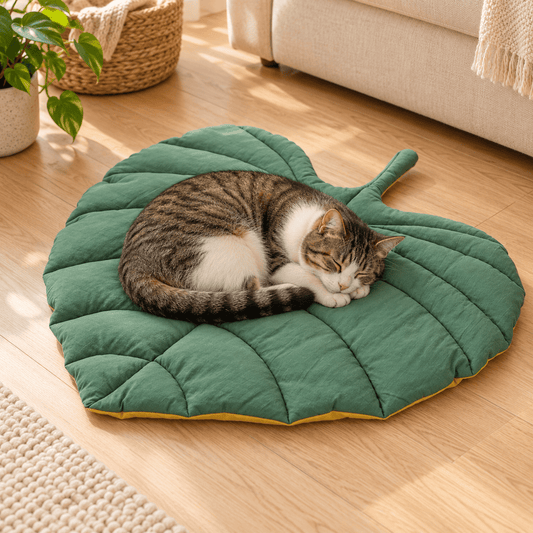
Verdelle is a flat, padded leaf-shaped cushion with a polyester-blend exterior, PP cotton filling and reversible green faces. The Classic Leaf measures approximately 50 × 68 cm; its tapered outline provides less resting area than a rectangle of the same dimensions. Check the selected variant and current dimensions. It is listed as washable, but that does not establish a removable cover, machine-wash cycle or waterproof construction.
A window sill is suitable only when the resting surface fits fully and remains secure. For a narrow sill, choose a purpose-made perch with verified mounting and load requirements rather than balancing a loose cushion on the edge. Keep windows secure, remove reachable blind cords and provide a comfortable route up and down. A floor-level nook can be the better choice for a cat that struggles to jump.
Redirect Scratching With a Better-Placed Alternative
Scratching is normal feline behavior. Furniture protection works best alongside appealing scratching surfaces, rather than relying on fabric choice alone. Observe direction and material preference, then offer an appropriate option where the scratching already happens.
A cat working on a sofa arm may favor a stable vertical post tall enough for a full stretch. A rug scratcher may prefer a secured horizontal mat. Compare sisal, cardboard and other suitable textures by what the individual uses. Check stability, exposed fixings and replacement surfaces before choosing a design.
Place the alternative beside the current target or near a sleeping spot where stretching occurs. Reward voluntary use with something the cat enjoys. Do not force their paws onto it. Once the alternative is used reliably, consider a gradual move rather than suddenly relocating it across the room.
For a cohesive look, repeat the sofa’s wood tone, choose a neutral frame or match a mat’s edging to an existing accent. Keep the scratching surface visible and accessible. A beautiful post hidden behind a cabinet may leave the sofa as the easiest option. Avoid using ordinary decorative baskets or rugs as substitutes for a purpose-made scratcher.
Add Protective Layers That Fit and Stay Put
A fitted slipcover or washable throw can give a favorite seat a manageable cleaning layer. Measure seat depth, cushion shape and arm coverage so protection reaches the places paws and claws actually touch. Confirm that straps, loose ties and hardware remain inaccessible to pets.
A washable throw is not automatically waterproof, and a waterproof barrier is not necessarily claw resistant. Choose the property you need and confirm it in the listing. Check whether the cover slips on your upholstery, allows comfortable seating and can dry within your normal laundry routine. A spare can be useful while the first is being cleaned.
- Buying odor-resistant or scratch-proof claims without evidence for the exact item.
- Choosing a rug larger than your permitted washing capacity.
- Placing every pet resource together for visual symmetry.
- Hiding the scratcher while leaving the sofa arm exposed.
- Using a decorative cushion on an unsupported narrow sill.
Your Pet-Friendly Room Buying Checklist
- Observe preferred resting and scratching locations before choosing products.
- Confirm bowl material, opening, capacity, stability and cleaning instructions.
- Inspect fabric texture and request a sample when possible.
- Verify each stain, water and odor claim separately.
- Check rug washing capacity, backing and drying requirements.
- Measure the bed’s usable sleeping area and its intended location.
- Choose stable scratching options that match direction and material preferences.
- Fit protective covers without loose accessible attachments.
Choose with confidence: Start with one well-fitting piece and one useful placement change. The aim is a home that feels comfortable to share and straightforward to maintain.
Bring the Details Together With Pet Living
Explore Pet Living for coordinated feeding and resting pieces. Petaline brings soft-colored ceramic dishes to daily feeding; Verdelle adds a botanical resting surface. Choose them around your cat’s size and preferences, then coordinate through your room’s existing colors. The sofas, rugs, scratching furniture and protective covers discussed here are general buying considerations, not claims about those two products or included accessories.
Further Reading
For the underlying behavior and care guidance, see Ohio State University’s scratching guidance, its guide to resting areas Cats Protection’s scratching advice and Cats Protection’s drinking guidance. Fabric care should follow the selected product’s manufacturer; Crypton’s upholstery care instructions illustrate why cleaning guidance is fabric-specific.