A truly cozy room rarely happens all at once. It grows in layers: a lamp that softens the evening, a blanket you reach for without thinking, a shelf filled with objects that mean something. That lived-in warmth is at the heart of burrowcore—a relaxed decorating approach that turns one corner of your home into a personal retreat.
Despite its snug name, burrowcore is not about making a room dark, crowded or themed. It is about creating a sense of shelter. And you do not need an entire room—or even a large home—to try it. A bedroom corner, reading chair, window nook or quiet end of the sofa can become a place that feels distinctly yours.
Begin With the Feeling, Not the Shopping List
Before adding anything, decide how you want to use the corner. Will it be a place to read, drink coffee, journal or simply unwind? That purpose should guide every choice. A reading corner needs focused light and somewhere to set a book. A bedroom retreat may need only a softer lamp, one supportive pillow and a comforting throw.
Build a Softer Pool of Light
Lighting does more than help you see—it defines the emotional boundary of your corner. Instead of relying on a bright ceiling fixture, use a table lamp, wall light or low floor lamp to create a warm pool of illumination. A shade made from linen, paper or another softly diffusing material will feel gentler than an exposed bulb.

If the corner is near a window, let natural light do part of the work during the day. Sheer curtains soften harsh sun, while a warm bulb carries the same calm feeling into the evening. The goal is not darkness; it is contrast between your retreat and the brighter room around it.
Key idea: Light the activity and the atmosphere—not every inch of the room.
Layer Texture Without Adding Clutter
Burrowcore is tactile. Linen, boucle, washed cotton, woven fibers and softly worn wood make a corner feel inviting before you even sit down. The trick is to vary texture while keeping the palette connected. Two or three closely related colors—such as cream, muted olive and cocoa brown—allow different materials to coexist without visual noise.

| Layer | Try | Skip |
|---|---|---|
| Softness | One throw and one or two cushions | A pile that hides the seat |
| Natural texture | Woven basket, wood or ceramic | Many small competing finishes |
| Color | Two neutrals plus one muted accent | Matching every object exactly |
A cozy corner should invite you to settle in—not ask you to rearrange it first.
Choose Objects With a Story
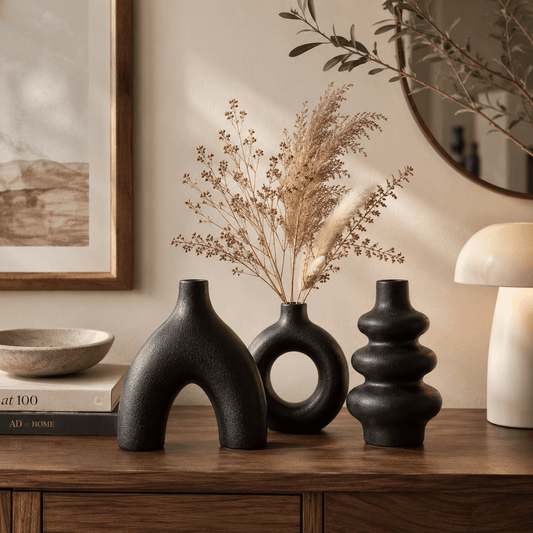
The most convincing burrowcore spaces feel collected rather than decorated in a single afternoon. Include something personal: a favorite book, a small piece of art, a handmade bowl, a travel find or a framed memory. These objects give the corner emotional texture that a perfectly coordinated display cannot.

Use restraint when arranging them. Group two or three items with different heights, then leave some open space. A shallow tray can make small belongings feel intentional, while a basket keeps practical extras close without leaving them on display.
- Avoid filling every shelf or surface.
- Avoid buying decorative objects only because they fit the trend.
- Avoid so many cushions or throws that the corner is no longer comfortable.
Give the Corner a Gentle Boundary
A corner feels more restorative when it has a visual edge. In a small room, that boundary might be created by a compact rug, a pool of lamplight, one piece of wall art or a tall plant. You do not need a divider or new furniture. Even turning a chair slightly away from the rest of the room can signal that this is a quieter zone.
Keep pathways clear and allow the room to breathe. Burrowcore should make a space feel more comforting, not smaller.
Let It Evolve With You
The best part of this approach is that it never needs to be “finished.” Change the book beside your chair, bring in a branch from outdoors or swap a light textile for a heavier one as the season turns. Over time, the corner becomes a record of what helps you feel at home.
Your burrowcore corner does not need to follow a formula. It only needs to feel like the place in the room where you naturally want to stay.