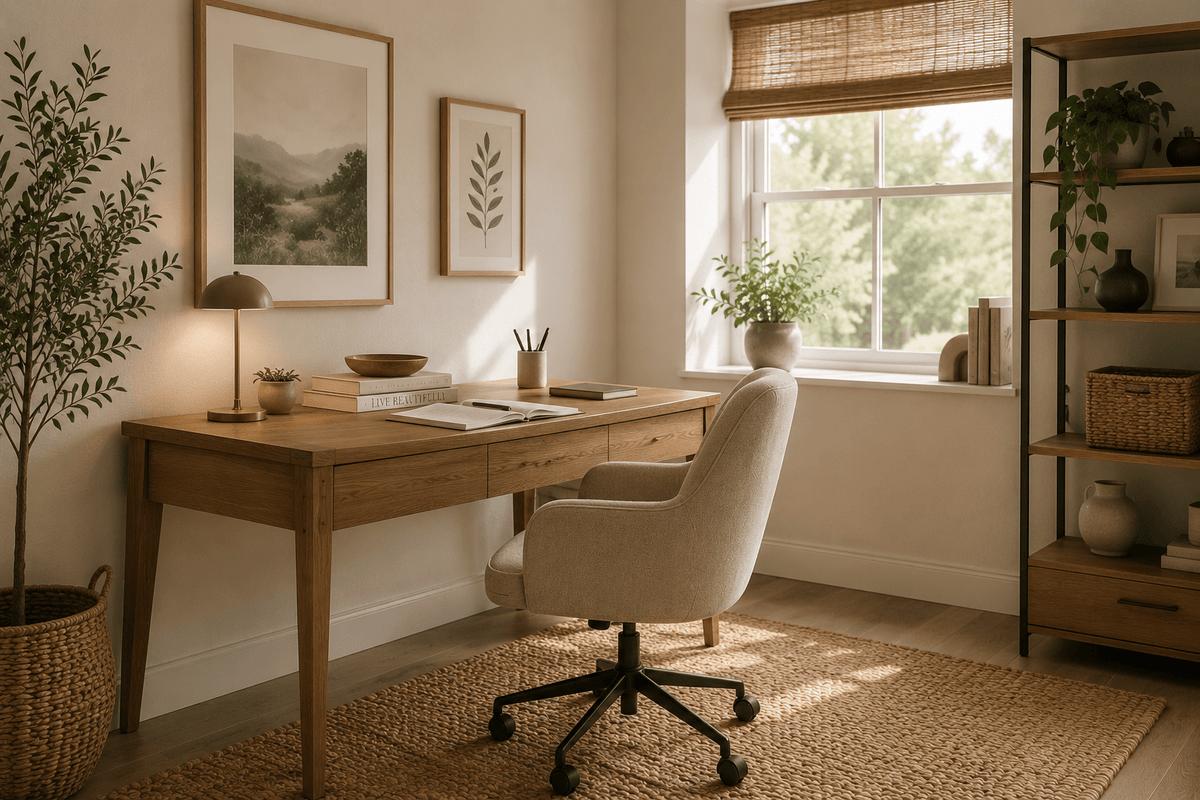


A living room has to support conversation, relaxing, reading, entertaining, and everyday movement. Successful décor connects those activities without crowding seating or filling every surface. Scale and placement matter more than the number of objects.
Map the Room Before Shopping
Record the room, furniture, doors, windows, outlets, and natural walking routes. Photograph the room from its entrance. Identify whether the space needs light, softness, height, color, or storage before buying another decorative object.
Choose a Clear Visual Anchor
Most rooms benefit from one primary anchor: a sofa wall, fireplace, broad artwork, rug, or coffee-table grouping. Supporting pieces should reinforce it rather than compete. Repeat a small number of shapes, colors, and materials across the room.
Check Scale Around Seating
Measure sofa width, seat depth, arm height, side-table surfaces, and the clear space around each piece. Lamps must reach useful positions without exposing bulbs. Pillows should add support while leaving enough room to sit.
Practical rule: Choose the item that fits the room, the routine, and the maintenance you can realistically provide.
Layer Pillows and Throws
Start with two or three anchor pillows in proportion to the sofa, then introduce one lead pattern or tactile accent. Repeat a color instead of matching every fabric. Place throws where they can be used, and check care, shedding, and snag risk.
Build Three Layers of Light
Combine general ambient light, task lighting beside seating, and a smaller accent source for depth. Separate controls allow the room to shift between active daytime use and a calmer evening mood. Keep bulb color reasonably consistent.
Size Wall Art to Furniture
Art above a sofa should relate to the furniture width and be close enough to read as one composition. Check frame depth, hanging hardware, and eye level from both seated and standing positions. Preview the outline before installation.
Keep Tables Functional
A coffee table should retain space for drinks, books, or daily use. Group smaller accents on a tray, vary height, and keep the arrangement low enough for sightlines. Edit side tables so lamps and practical items remain easy to reach.
A cohesive living room repeats a few ideas—color, material, shape, and light—without matching every object.
Common Buying Mistakes
- Buying small accents before deciding what the room lacks.
- Using pillows that occupy most of the seating.
- Relying on one bright ceiling light.
- Hanging art too high or too small for the sofa.
- Covering the coffee table with objects that must be moved daily.
Final Buying Checklist
- Map furniture, outlets, doors, and walking paths.
- Choose one visual anchor.
- Measure every surface and furniture relationship.
- Select pillows by comfort, scale, and care.
- Plan ambient, task, and accent lighting.
- Size wall décor to nearby furniture.
- Preserve usable table and seating space.
Ready to compare options? Explore Urban Alcove’s living room collection.