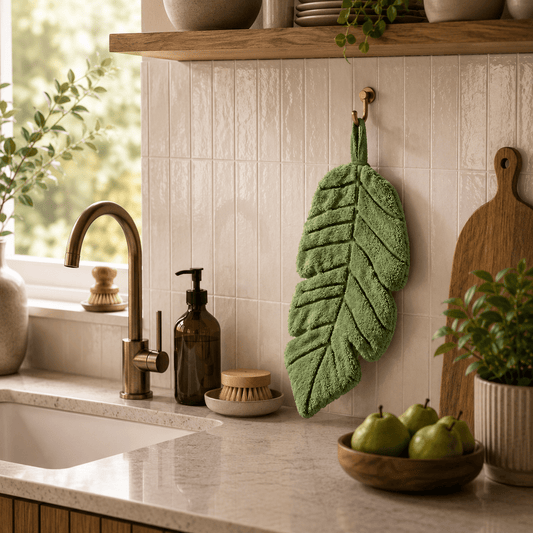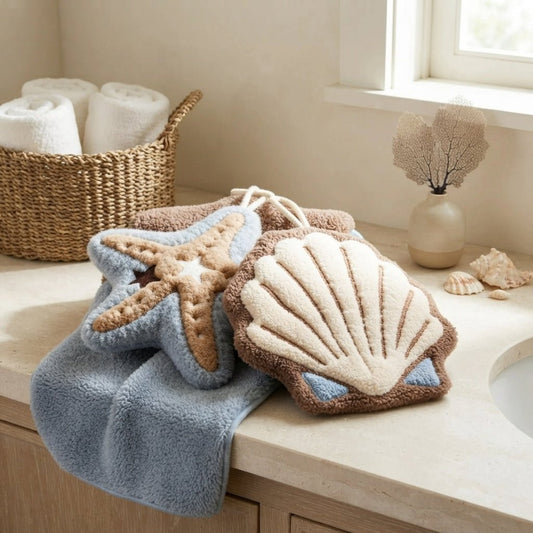


A towel should suit the way you use your bathroom, not just the color of the tile. Start with the job it needs to do, then compare its dimensions, fiber content, weave and care requirements. Softness matters, but so do absorbency, drying space and the amount of laundry your routine can handle.
Choose the Towel for the Job
Separate the towels you need for washing and drying from those used mainly as a decorative accent. A small embroidered hand towel can finish a guest bathroom beautifully, while an everyday hand towel may need to stand up to frequent washing. Look at the stated use and construction before deciding whether one towel can do both jobs.
For bathing, decide how much coverage you want and how much space you have to hang a towel fully open. A larger towel can feel generous but become awkward on a short rail. For guests, a clearly designated hand towel is a practical finishing touch.
| Towel type | Typical purpose | What to verify |
|---|---|---|
| Washcloth or face cloth | A small cloth for washing | Texture, dimensions and washing instructions |
| Guest or fingertip towel | Hand drying in a guest setting | Actual size; naming varies by retailer |
| Hand towel | Regular drying beside the sink | Rail fit, laundering and everyday durability |
| Bath towel | Drying after a shower or bath | Coverage and space to hang it open |
| Bath sheet | More generous coverage | Listed dimensions, storage and drying space |
Read Dimensions Instead of Trusting the Size Name
Terms such as guest towel, bath towel and bath sheet do not guarantee one exact size across brands. Read width and length in the listing. If you like your current towels, measure one laid flat and use that as a reference.
For a rail, check how the towel will sit when folded over it. As a simple example, a towel that is 54 inches long hangs about 27 inches below the rail when folded evenly in half, before allowing for the thickness of the rail. Compare that drop with counters, radiators and the floor.
Also consider the width. A towel squeezed into a narrow space can remain bunched, reducing the area exposed to air. Plan the hanging arrangement for the largest towel you want to buy, then check cupboard space for clean spares.
Understand Fiber Content and Weave
Read the composition rather than relying on words such as plush, spa or luxury. Cotton, synthetic fibers and blends can have different feel and care requirements. If a product uses a material name such as bamboo, look for the actual fiber label and percentages so you know what you are purchasing.
Weave affects the surface as well as appearance. Terry has visible loops; waffle has a textured grid; flat-woven towels have a smoother, less bulky profile. These descriptions are a starting point, not a performance guarantee. Compare the particular product's weight, construction and care instructions.
| Construction | What it looks or feels like | Consider before buying |
|---|---|---|
| Terry loops | A looped surface with a cushioned feel | Pile density, snagging and drying space |
| Waffle weave | A patterned grid with a lighter-looking texture | Actual weight, dimensions and possible shrinkage |
| Flat weave | A flatter surface that folds compactly | Whether the feel and absorption suit your use |
| Decorative embroidery or trim | Detail that contributes to the room's style | Whether trim changes washing or everyday handling |
Use GSM as a Weight Clue
GSM means grams per square meter: the weight of the fabric across a given area. It helps you compare density, but it is not a complete quality score. Fiber, construction, finishing and the towel's size also matter.
A lighter towel may fit a frequent-washing routine or a bathroom where drying space is limited. A heavier towel may provide the substantial feel you prefer. Within comparable constructions, heavier fabrics generally need more drying time. Compare products in the context of the room and your laundry habits rather than treating the highest number as the automatic winner.
If GSM is not listed, do not invent it from the photograph. Look for fiber content, weave, dimensions and care guidance. Ask for more detail if density is essential to your decision.
Plan Where Used Towels Will Dry
Check the hanging space before ordering a complete matching set. Can each regularly used towel be spread out? Is the rail easy to reach? Will the fabric touch the floor or sit against a damp surface? A towel's everyday performance depends partly on where it lives.
Avoid choosing a larger size simply because it sounds more luxurious. If it overwhelms the rail, takes up the whole laundry load or is difficult to handle when wet, a smaller option may be more comfortable to use. Think about the people using it as well as the room.
Keep decorative folding for clean, dry towels. After use, open the towel out to dry and follow the product's laundering guidance. If you use a heated rail, check the towel and rail manufacturers' instructions.
Check Care Instructions Before You Buy
Confirm the washing temperature, whether tumble drying is allowed and whether the towel needs special treatment because of embroidery, trim or its fiber blend. A towel that requires a routine you do not use is unlikely to be a practical favorite.
Wash new towels according to their label before use. Follow detergent guidance, separate colors when appropriate and avoid assuming every towel tolerates bleach, high heat or fabric conditioner. Fabric conditioner can reduce absorbency, so follow the maker's advice and use it cautiously.
Choose the number of spares around your laundry schedule. One in use and one clean spare per regular user can be a simple starting plan, with more if washing is infrequent or guests stay often. This is a planning suggestion, not a fixed household requirement.
Coordinate Color Without Buying Too Much
Start with one everyday base color and a small accent if you want variety. Cream, soft green or muted earth tones can sit comfortably in a warm bathroom, but take your actual tile, paint and lighting into account. A small product sample or one towel is a more useful color check than buying a full set from a screen alone.
You can use a different color or trim for guest towels so they are easy to identify. Keep the rest of the room simple: repeating one towel color in a small accessory can make the space feel coordinated without making every object match.
For a broader plan, read our bathroom décor buying guide. For hosting, see our guest-bedroom checklist.
Avoid These Common Towel-Buying Mistakes
- Assuming every bath towel or guest towel has the same dimensions.
- Using GSM as the only measure of quality.
- Buying a large, heavy towel without enough hanging space.
- Choosing decorative trim without checking its care requirements.
- Ordering more matching pieces than your household will use.
Your Final Towel Buying Checklist
- Identify the job: face, hands, bathing, guests or decoration.
- Read actual dimensions and compare them with a towel you like.
- Check fiber content, weave and GSM when provided.
- Measure hanging drop, rail width and storage space.
- Confirm washing and drying requirements.
- Buy enough spares for your routine, then coordinate the colors.
Explore Urban Alcove’s bathroom collection and use the checks above to compare the pieces that suit your space.