Wall decor can change the scale, mood, and focus of a room, but the right choice depends on much more than finding an image or object you like. This guide walks through measurements, placement, formats, materials, and installation so the finished piece feels connected to your space.
Measure the Wall and the Furniture
Start with the usable wall area, not the room’s total width. Record the width and height between trim, windows, doors, sconces, and nearby furniture. If the piece will hang above a sofa, bed, console, or dining cabinet, measure that furniture too. Wall decor should read as connected to what sits below it rather than floating independently.
Choose the Right Format for the Space
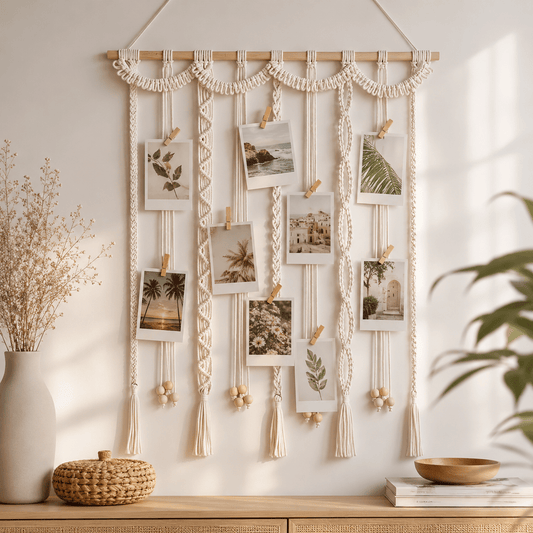
Large framed art or a sculptural wall piece creates one calm focal point. A gallery wall offers flexibility and can combine photographs, illustrations, mirrors, and small objects, but it requires more planning. Tall, narrow walls often suit vertical pieces; long furniture usually benefits from a horizontal composition or a balanced row.
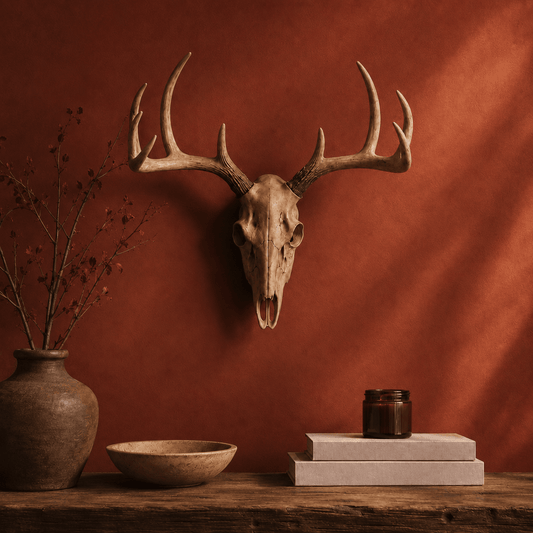
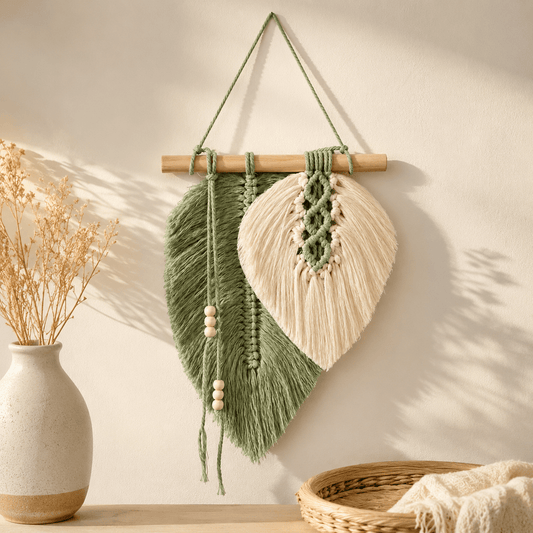
Mirrors add reflected light and apparent depth, while woven hangings soften hard surfaces and improve visual warmth. Metal and carved objects introduce shadow and dimension. Choose the format based on what the room lacks—not only what looks attractive in a product image.
Plan Hanging Height
Use eye level as a starting point. On an open wall, place the visual center near eye level, commonly around 57 to 60 inches from the floor. Above furniture, let the relationship to the furniture lead: the lower edge often sits about 6 to 10 inches above a sofa, console, or headboard. Too much space makes the objects feel disconnected; too little can look cramped.
Account for how the piece will be viewed. Hallway art is usually seen while standing, while bedroom and living-room pieces are often viewed from a seated or reclining position. For gallery walls, treat the entire arrangement as one large shape and position its collective center.
Understand Visual Weight and Color
Size is only part of scale. A large quiet piece may be easier to live with than several small high-contrast objects.
Dark frames, dense patterns, thick materials, and high contrast increase visual weight. Pale, open, or finely detailed pieces feel lighter.
Wall decor does not need to repeat every color in the room. Choose one or two connections—a wood tone, metal finish, warm neutral, organic curve, or accent color—then allow the piece to introduce contrast. This produces a collected look without making the room feel themed.
Check Materials and Room Conditions
Humidity, direct sunlight, and temperature changes affect paper, textiles, wood, metal, adhesives, and finishes. Use bathroom or outdoor wall decor only when the product is specifically suitable for that environment. Sunlight may fade prints and textiles or alter natural materials over time.
For mirrors and glass-fronted art, consider reflections and glare before choosing a location. Woven pieces can gather dust; carved and textured objects may require gentle detail cleaning. Review care information before placing delicate materials above a cooking area or near moisture.
Prepare for Safe Installation
Confirm total weight, mounting points, orientation, included hardware, and how far the piece projects from the wall. Drywall, plaster, masonry, tile, and studs require different fasteners. Included hardware is not automatically appropriate for every wall.
Use two mounting points where the design requires stability, especially for mirrors and pieces that could shift. Check for wiring and plumbing before drilling. Large, heavy, fragile, or unusually shaped pieces are good candidates for professional installation.
Common Wall Decor Mistakes
- Buying before measuring the wall and nearby furniture.
- Hanging a small piece too high above a large sofa or bed.
- Spacing gallery-wall pieces so far apart that they stop reading as a group.
- Ignoring glare, sunlight, humidity, or door clearance.
- Assuming supplied hardware suits the wall type and weight.
Final Buying Checklist
- Measure usable wall width and height.
- Measure the furniture below the planned display.
- Confirm the piece’s dimensions, weight, depth, and orientation.
- Test scale and height with painter’s tape.
- Check material suitability for sunlight or humidity.
- Choose hardware for the wall construction and load.
- Plan consistent spacing for grouped pieces.
Ready to compare options? Explore Urban Alcove’s wall decor collection.