Decorative pillows may be small, but they can change the entire feeling of a room. They bring softness to clean-lined furniture, introduce color without a major commitment, and make a sofa or bed feel more inviting. They are also one of the easiest elements to update when your style—or the season—changes.
The secret to a pillow arrangement that feels collected rather than random is not buying a perfectly matched set. It is understanding how fabric, surface texture, pattern, size, and shape work together. Once you know what each pillow contributes, mixing them becomes much easier.
Whether you are starting with an empty sofa or refreshing pillows you already own, this guide will help you build a layered arrangement that feels balanced, comfortable, and personal.
Start With the Fabric
Fabric affects far more than how a pillow feels. It influences how a color reads, how formal the pillow appears, how much visual weight it carries, and how easily it mixes with other pieces.
Cotton and cotton blends
Cotton is an adaptable choice for everyday spaces. It can feel crisp and casual, softly washed, or substantial and canvas-like depending on the weave. Cotton and cotton-blend covers work particularly well in relaxed living rooms, bedrooms, and family spaces because they sit comfortably alongside linen, denim, wool, and natural fibers.
Linen and linen-look fabrics
Linen has a naturally relaxed character. Its slight slubs and variations keep solid colors from appearing flat, making it useful when you want quiet texture rather than a bold pattern. Linen-look fabrics can offer a similar visual effect, sometimes with easier care or greater wrinkle resistance.
Velvet
Velvet adds depth because its pile catches light differently as you move around the room. Deep colors can look especially rich in velvet, while pale shades introduce a soft glow. One or two velvet pillows can give a neutral arrangement contrast without relying on a busy design.
Chenille
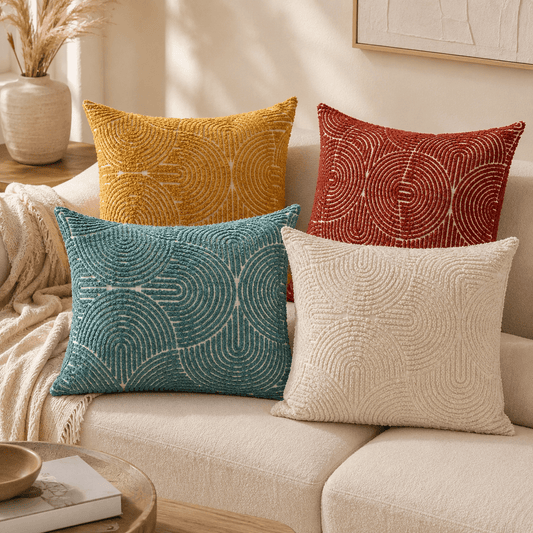
Chenille has a plush, softly raised surface that makes a space feel warmer. It can be woven into understated geometric patterns or used more simply for all-over texture. A design such as the Loomline Textured Chenille Pillow Cover can bridge the gap between a solid pillow and a strong pattern.
Polyester and performance-minded fabrics
Polyester is highly versatile. Depending on its construction, it can resemble canvas, linen, velvet, or a tightly woven textile. It is common in decorative covers because it can hold color and detailed designs well. Look beyond the fiber name and pay attention to the actual weave, finish, care directions, and feel described on the product page.

Tufted, Embroidered, Printed or Woven: What Is the Difference?
Two pillows can share the same colors and still have completely different effects. That difference often comes from how the decoration is created.
Tufted pillows
Tufting uses raised yarn to form a pattern above the base fabric. The result is tactile and dimensional, so even a neutral tufted pillow can hold its own within an arrangement. Because the surface already has plenty of character, tufted designs pair well with smoother solids and restrained prints.
For a coordinated approach, the Onda Geometric Tufted Cushion Cover Set creates variation through related raised patterns. A single design such as the Tidal Coastal Tufted Pillow Cover can instead serve as the tactile focal point.
Embroidered pillows
Embroidery creates a design with thread stitched onto the fabric. It adds both visual detail and subtle relief, often giving botanical, geometric, or figurative motifs a more dimensional quality than a flat print. Embroidered pillows are especially useful when you want a decorative centerpiece that still feels soft and textural.
The Rosalie Bloom Embroidered Floral Cushion Cover offers a refined botanical example, while the Zuri Moroccan Embroidered Tassel Pillow Cover combines embroidery with dimensional trim.
Printed pillows
Printed designs sit on the surface of the fabric rather than being built from raised yarn or stitching. Printing allows for crisp lines, detailed illustrations, painterly effects, and a wide range of colors. A printed pillow is often the easiest place to introduce the palette for an entire arrangement: choose one print you love, then pull supporting colors from it.
Woven and jacquard pillows
In a woven design, the threads themselves form the pattern or texture. Jacquard is a more intricate type of weaving that can produce detailed motifs and subtle changes in sheen. Woven pillows tend to bring visual depth without the obvious raised surface of tufting. They are strong supporting pieces because they can read almost like solids from across the room while revealing more detail up close.
Fringe, tassels, boucle and faux fur
These finishing textures contribute movement and softness. Fringe and tassels lend a relaxed, often boho character. Boucle and faux fur add more pronounced volume. Use them with restraint: one heavily textured piece usually looks more intentional than several competing novelty surfaces.
The Most Useful Decorative Pillow Sizes
There is no single correct pillow size, but a few dimensions appear again and again because they layer well.

- 18 × 18 inches: A classic decorative size and a practical choice for accent chairs, compact sofas, or the front layer of a larger arrangement.
- 20 × 20 inches: Large enough to feel substantial without overwhelming most sofas. This is an especially flexible all-purpose size.
- 22 × 22 inches: A generous foundation pillow for a standard or deep sofa. It creates a fuller, more relaxed look.
- 24 × 24 inches: Best on roomy sofas, sectionals, or beds where its scale will not dominate the furniture.
- 12 × 20 inches: A common lumbar proportion that works well as a finishing layer in front of square pillows.
- Round and shaped pillows: Useful as a single accent when an arrangement needs a break from repeated square forms.
Do not judge a pillow size in isolation. A 24-inch pillow can look perfectly balanced on a deep sectional and oversized on a petite loveseat. Start with the scale and depth of the furniture, then select the largest pillow that looks comfortable rather than crowded.
How to Layer Different Pillow Sizes
The easiest way to create depth is to place the largest pillows at the back and gradually move toward smaller pieces.
On a standard three-seat sofa, try two 22-inch pillows as the outer foundation. Place one 18- or 20-inch pillow in front of each, then finish with a lumbar pillow near the center. The arrangement has a clear hierarchy, but the varied shapes keep it from feeling like a matching set.

If you prefer a lighter arrangement, use just three pillows: two coordinating squares and one contrasting lumbar. On an accent chair, one appropriately scaled pillow is usually enough.
For a bed, begin with the pillows you use for sleeping, then add decorative pieces in descending order. Large squares can sit near the headboard, medium squares add pattern or texture, and a lumbar pillow finishes the front. Leave enough open space that removing the decorative pillows does not become a nightly project.
How to Mix Patterns Without Making the Room Feel Busy
A successful mix has variety, but it also has a thread of repetition.
Repeat at least one color
The pillows do not need to contain exactly the same palette. Repeating one or two colors is enough to make different designs feel connected. For example, a botanical print with muted olive leaves could sit beside a solid olive chenille pillow and a cream tufted pillow with a small olive detail.
Change the scale of the patterns
Pair a large botanical, stripe, or geometric motif with a smaller pattern and at least one quieter surface. When several patterns are all the same scale, they compete for attention. A clear difference between bold, medium, and subtle patterns lets the eye rest.
Combine structured and organic motifs
Geometric lines bring order; florals, leaves, and abstract shapes add movement. Using both can keep an arrangement from feeling too rigid or too whimsical.
Give the strongest design room to lead
Choose one pillow as the focal point, then let the other pieces support it. Not every pillow needs embroidery, tassels, dramatic color, and a bold motif. Restraint is what allows the most distinctive piece to stand out.

How to Mix Textures Like a Designer
Texture works best through contrast. A smooth printed cotton looks more interesting beside plush chenille. Raised tufting becomes more noticeable next to a quiet woven solid. Embroidery feels special when it is not competing with several equally detailed surfaces.
For an easy starting formula, combine:
- One smooth or lightly woven foundation pillow
- One pillow with a visible pattern
- One tactile pillow with tufting, embroidery, chenille, fringe, or tassels
You can repeat that formula on a larger sofa while varying the sizes. If the room already includes strong texture—such as a boucle chair, chunky throw, woven rug, or patterned upholstery—let some of the pillows remain simple.
Easy Pillow Formulas for Sofas, Chairs and Beds
The three-pillow sofa
Use two square pillows in a shared color family, then add one lumbar with a contrasting pattern or texture. This is easy to maintain and works well on smaller sofas.
The five-pillow sofa
Start with two large foundation pillows, layer two slightly smaller accents in front, and finish with one lumbar. Repeat a color across at least three of the five pieces, but vary the patterns and surfaces.
The sectional
Treat each corner as a small grouping rather than spreading pillows evenly around the entire sectional. Use larger pillows where the back and arm meet, then add a smaller square or lumbar in front. Leaving some open seating space keeps the arrangement functional.
The accent chair
Choose one pillow that relates to the sofa arrangement without copying it exactly. Repeating a color, fabric, or motif is enough to connect the chair to the rest of the room.
The layered bed
Use the headboard and sleeping pillows as the visual foundation. Add two or three decorative layers, moving from large to small. A single lumbar across the front often provides a cleaner finish than a row of several small pillows.

A Note About Pillow Inserts
The insert influences the final silhouette as much as the cover does. An insert that matches the cover size usually creates a softer, more relaxed shape. For many square covers, an insert approximately two inches larger can create a fuller appearance and more defined corners, provided the cover fabric and seams can accommodate it.
Lumbar covers and heavily embellished designs may behave differently, so always check the product measurements and recommendations first. Also confirm whether a listing includes an insert; many decorative pillow products are sold as covers only.
Build a Collection, Not a Matching Set
The most inviting pillow arrangements look connected without looking identical. Start with the room’s existing colors, choose one focal design, and add supporting pillows that vary in size and surface. Repeat enough color to create harmony, then use texture and pattern scale to add depth.
You do not need to replace every pillow at once. A new embroidered focal point, a tactile lumbar, or a pair of larger foundation covers may be all the room needs. Explore the Urban Alcove Soft Furnishings collection for tufted, embroidered, woven, and chenille options that can be layered into a combination that feels distinctly yours.