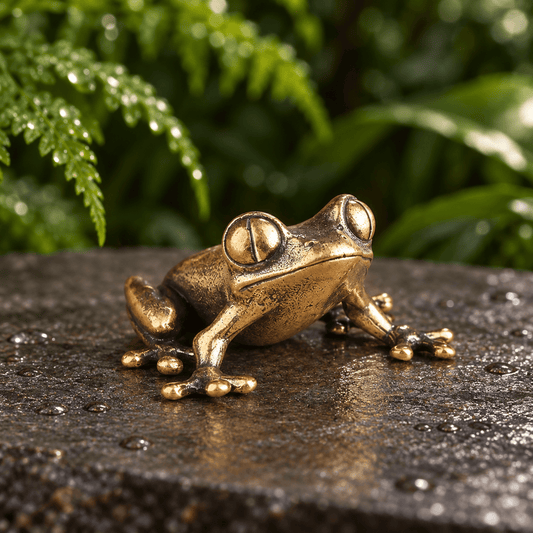


A tiny frog beside your notebook. A snail tucked into a bookshelf arrangement. A turtle that reminds you of a favorite coastal trip. Small figurines bring personality into the everyday corners of a home, without needing a whole shelf of their own. The best choice starts with a creature or shape you enjoy, then a few practical checks: material, actual size, finish, and somewhere you will notice it.
This small figurine buying guide compares brass, copper, resin, ceramic, and plastic, then shows how to display miniature ornaments with room to breathe. Whether you are choosing one desk companion or building a little collection, start with the space you already have.
Brass, Copper, Resin, Ceramic or Plastic?
There is no single best material for every display. Decide whether you want metallic warmth, painted detail, glazed color, or a lightweight playful accent. Material affects feel and care, but construction and finish matter too.
| Material | Look and feel | A good choice for | Check before buying |
|---|---|---|---|
| Brass | A copper-and-zinc alloy, often golden in tone; solid pieces can feel substantial for their size. | Warm metal details beside wood, books and pottery. | Solid or hollow construction, surface treatment and care instructions. |
| Copper | Bare copper has reddish warmth; a coating or decorative finish can change its appearance. | Rich metallic accents and detailed animal forms. | Whether the visible color is copper itself or an applied finish. |
| Resin | Usually a cast polymer material, sometimes with fillers; often painted or given a metallic effect. | Expressive shapes, fine molded detail and varied colors. | Delicate projections, paint quality, weight and heat/light guidance. |
| Ceramic | Fired clay with a glazed or unglazed surface; can be smooth, glossy or textured. | Color, tactile texture and sculptural silhouettes. | Chipping risks, the base, and whether decoration needs special care. |
| Plastic | A broad family of materials, often lightweight and molded in color or painted. | Casual displays, bright colors and easy rearranging. | Specific material, finish, stability and suitability for the location. |
Resin and plastic are not entirely separate scientific categories: many decorative casting resins are plastics. In home decor listings, “resin” usually describes a cast ornament, while “plastic” often describes a molded piece. Neither label alone tells you its exact formulation or quality.
Likewise, “ceramic” does not automatically mean handmade, and “metal” does not automatically mean solid brass. A well-finished piece in an affordable material can be a lovely choice. Look at close-up details, the underside, clear specifications and the shape you actually enjoy.
Read the Material and the Finish Separately
Brass-colored, brass-finished and made from brass mean different things. A gold-toned ornament might be brass, another metal with a coating, or painted resin. Patina describes a surface appearance or change; an antique-style finish on a new piece does not make it an antique.
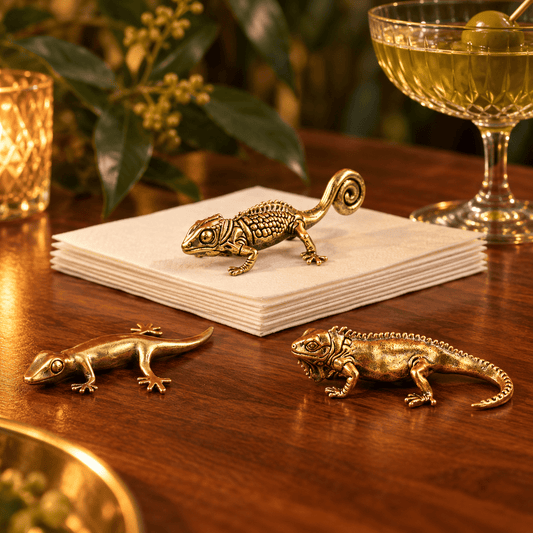
For example, Urban Alcove’s Little Wild lizards are listed as copper with an antique brass finish. Their golden appearance should not be confused with bare copper’s reddish color. This distinction also matters when cleaning: treatment appropriate for bare metal may damage an applied finish.
Check the Actual Miniature Scale
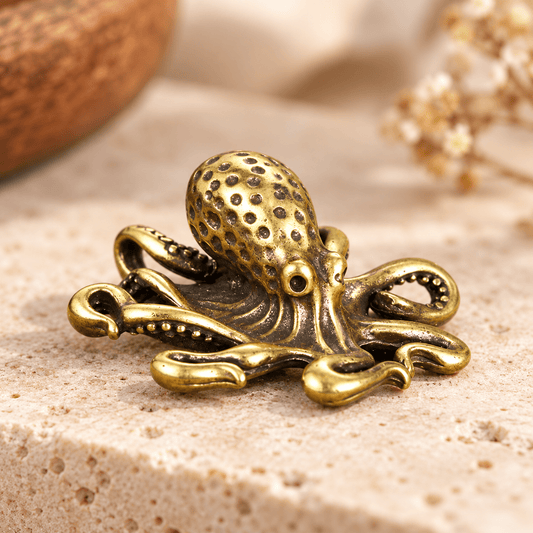
Close-up photography reveals tiny shells, toes and scales, but can make a miniature look much larger than it is. Compare length, width and height separately. A long, low lizard takes up a different footprint from a short upright animal, even when both are described as small.
As a real example, Tiny Jumpers has an approximate 2.7 × 2.8 cm footprint and stands 1.4 cm high (about 1.06 × 1.10 × 0.55 inches). It is a tiny detail for a close-view display, rather than a room-scale focal point.
Try a paper footprint. Mark the listed length and width on paper, cut it out, and put it where the figurine would sit. Use a ruler to picture the height. Then look from your chair and the doorway. If it disappears from farther away, choose a closer viewing spot or bring several pieces into one small grouping.
Check shelf depth, overhead clearance and the animal’s widest points, including tails or flippers. Leave a margin from the edge, and inspect whether the base or feet will sit securely. Dimensions are more useful than a broad label such as mini, small or medium.
One Favorite Animal or a Set?
A single figure creates a quiet personal detail. A set gives you a ready-made relationship between pieces, but the listing needs to tell you exactly what is included. A photograph showing several animals does not always mean you receive them all.
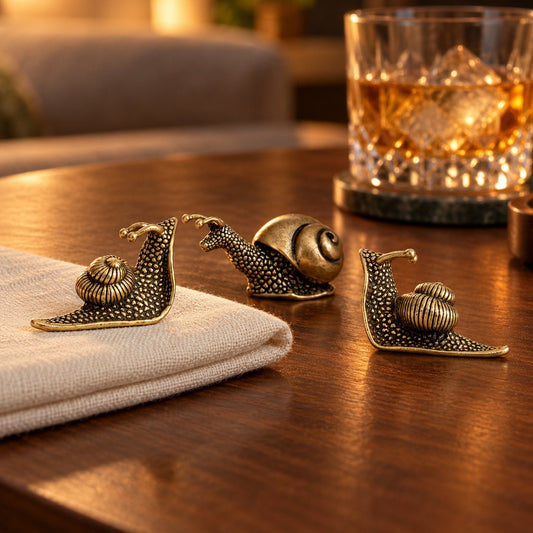
Little Slowpokes offers Sea Turtle, Snapping Turtle and Greek Tortoise designs, each sold individually. The Little Wanders snail trio and Little Gators are three-piece sets. Little Wild offers individual lizards as well as a three-lizard set. Choose the option, then check its contents.
For a gift, begin with the recipient’s favorite animal or a shared memory. Consider their available space and taste in finishes. Someone with a colorful ceramic collection may enjoy a different piece from someone who keeps a spare, neutral desk.
Four Easy Ways to Display Small Figurines
1. Give a bookshelf a close-up detail
Place a low animal beside a short stack of books or a larger ceramic object. The books create context, while the tiny figure adds character. Keep its silhouette clear of busy spines or patterned backgrounds. A mid-height shelf you pass often is usually more rewarding than the very top of a tall bookcase.
2. Choose a desk companion
Try one favorite near a notebook or pen tray, away from your keyboard, cables and the area your arms sweep across. A tiny figure works well here because you see it from nearby. Keep enough clear surface to work comfortably rather than filling the desk with a whole collection.
3. Gather a small group on a tray
A shallow tray gives several miniatures a shared boundary. Stagger them slightly so one does not hide another, and leave visible tray surface between them. Three can be an easy starting point, but a pair or single piece works too. For sizing help, see our decorative tray buying guide.
4. Create a little scene beside a planter
A snail or turtle can sit beside a ceramic planter on a dry shelf. Keep it outside the pot and away from watering spills unless the product specifically allows another use. Greenery provides a natural backdrop without needing an elaborate miniature landscape.
These are styling starting points. Move one piece at a time, check the view from where you normally sit, and keep the arrangement easy to clean.
Mix Materials Without Losing the Figurines
Repeat one connecting feature, such as warm metal, soft curves or an earthy color. Brass tones can sit comfortably with oak, cream pottery and olive accents; reddish copper can add warmth beside muted greens. A colorful ceramic animal can bring a small accent color into a neutral shelf.
Vary the surrounding heights while keeping the figurines visible. One taller vase, a low book stack and a small animal can make a balanced arrangement. Avoid lining everything up at the same height or filling every gap. Our decorative accents guide explores scale and grouping in more detail.
Keep Care Simple and Finish-Specific
For routine dust, begin gently with a soft, dry cloth or a very soft brush where the surface is sound. Support the body rather than lifting by a tail, antenna or other thin detail. Follow the individual product’s instructions before using water, cleaners or polish.
- Brass and copper: avoid automatic polishing. Abrasive cleaning can remove metal or alter a coating and intentional surface finish.
- Resin and plastic: avoid solvent cleaners and prolonged heat or strong direct sunlight. The formulation and painted finish affect what cleaning is suitable.
- Ceramic: protect against knocks, and do not assume an ornament is washable because some tableware is. Glazes, decoration, repairs and unglazed areas need different care.
Use a stable, dry indoor surface unless outdoor suitability is confirmed. Check rough bases before placing them on delicate furniture. Decorative miniatures are not toys; keep small pieces out of reach of young children and pets.
Common Buying Mistakes
- Judging scale from a close-up photograph alone.
- Assuming a metallic color proves the underlying material.
- Missing whether the selected option contains one figure or a set.
- Choosing a tiny ornament for a spot viewed only from across the room.
- Polishing an antique-style finish without checking the care instructions.
Your Final Figurine Buying Checklist
- Choose an animal or shape you will enjoy seeing.
- Confirm material, finish and included quantity.
- Check length, width and height against the intended spot.
- Plan a stable display with clear silhouettes and open space.
- Check care instructions and keep delicate details protected.
Find a little favorite in our Miniature Animal Figurines collection, then give it a small space that feels like yours.
Material and care references: Canadian Conservation Institute guidance on metal identification, brass and copper care, plastics, and ceramics. These support general care principles; follow the instructions for your specific piece.