Your entryway may be the smallest area in your home, but it sets the tone for everything that comes after it.
The good news? You don't need a grand foyer, a huge budget, or a perfectly sized console table to create an entryway that feels polished and intentional. With the right pieces, even a narrow hallway or tiny apartment entrance can feel welcoming, stylish, and surprisingly spacious.
The secret is to focus on function, proportion, and a few well-chosen details rather than trying to fill the space.
Here are nine simple ways to give your small entryway a designer look without overwhelming it.
1. Start With One Standout Piece
Small spaces benefit from editing. Instead of filling your entryway with lots of decorative objects, choose one piece that immediately draws attention.
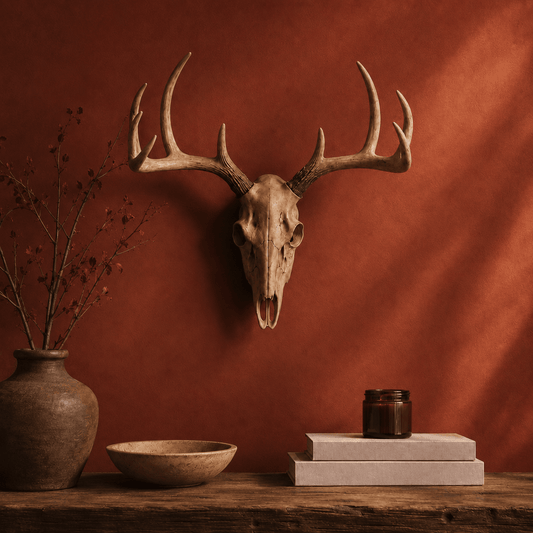
A round mirror, sculptural wall accent, distinctive lamp, or beautifully framed piece of art can become the focal point of the space.
Think of it as the entryway's signature piece. Everything else should support it rather than compete with it.

2. Add a Mirror to Make the Space Feel Bigger
A mirror is one of the easiest ways to make a compact entryway feel more open.
Position one across from or near a source of natural light when possible. The reflection can help brighten the area while visually extending the space.
For a more contemporary look, try a simple round or organic-shaped mirror. If your style leans Nordic, choose clean lines and understated finishes. For a more decorative space, a textured or sculptural frame can add personality.
The goal isn't simply to check your reflection before heading out. It's to use the mirror as part of the architecture of the room.
3. Keep Furniture Slim and Proportional
A bulky console can make a small entryway feel even smaller.
Instead, look for furniture with a narrow profile, open legs, or a wall-mounted design. You want enough surface area for essentials without sacrificing valuable walking space.
Before buying anything, measure the available width and depth. A beautiful piece that makes the entrance difficult to navigate isn't a good fit.
When in doubt, go slightly smaller rather than slightly larger.
4. Give Everyday Items a Home
A designer-looking entryway isn't necessarily an entryway with nothing in it. It's an entryway where everything has a place.
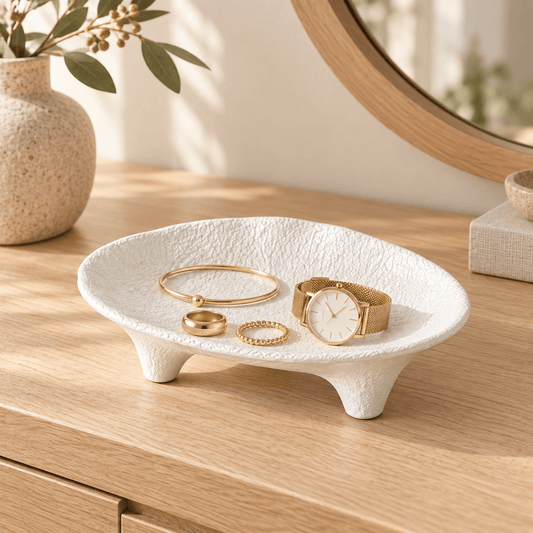
Use a small tray for keys, a decorative bowl for everyday essentials, or a compact basket for items that tend to accumulate near the door.
The trick is to contain visual clutter.
Instead of five small objects scattered across a surface, group them together on one tray. Instead of shoes collecting randomly by the door, designate a specific spot for them.
Good organization can make even inexpensive decor look more intentional.

5. Use Lighting to Create Atmosphere
Entryways are often overlooked when it comes to lighting, but the right fixture can completely change the mood.
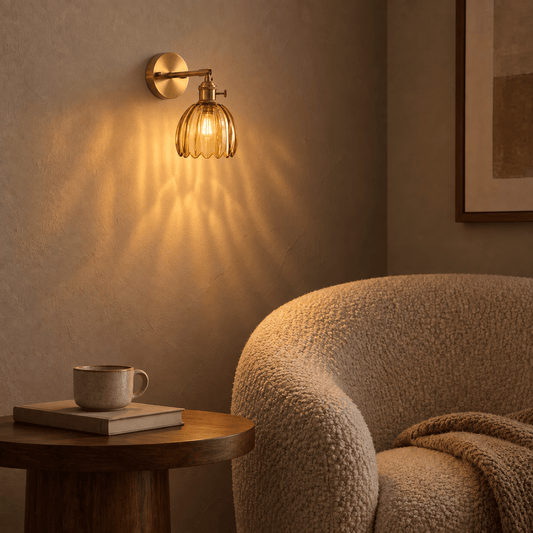
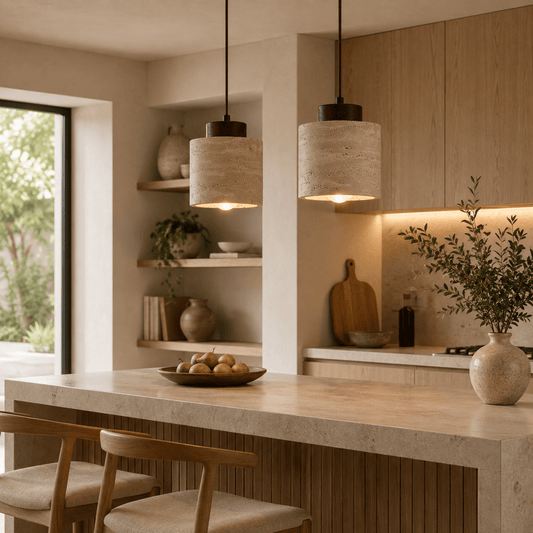
If your space has room for a table lamp, choose a compact design that adds both illumination and visual interest. A sculptural lamp can function almost like a decorative object when it's switched off and create a warm glow when you come home at night.
For especially tight spaces, consider wall-mounted lighting or another solution that doesn't take up floor or tabletop space.
Warm, layered lighting generally feels more welcoming than a single bright overhead light.
6. Think Vertically
When floor space is limited, look up.
Walls provide valuable decorating real estate without taking away from the walkway. Use them for mirrors, artwork, wall hangings, hooks, or other vertical accents.
You can also create visual height by placing artwork slightly above eye level or choosing a taller decorative element.
This draws attention upward and helps the entryway feel more substantial without adding physical bulk.
7. Introduce Texture
Small entryways can sometimes feel cold, particularly when they're dominated by hard surfaces.
Texture adds warmth and makes the space feel more layered.
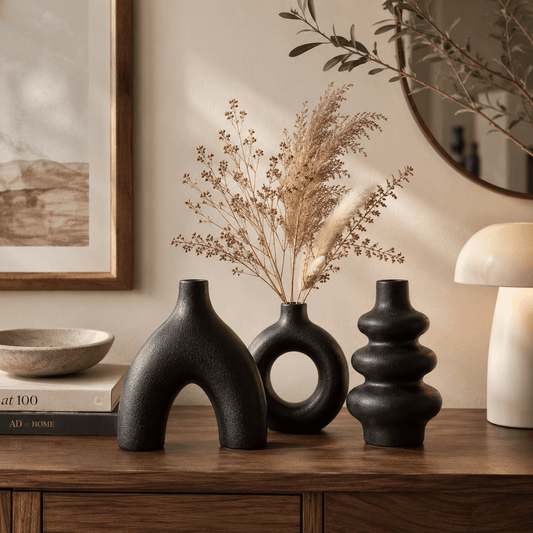
Try woven materials, natural wood, ceramic accents, textured textiles, or a small runner. You don't need many different textures. Two or three complementary materials can be enough.
For a Nordic-inspired look, combine light wood with soft textiles and simple ceramic pieces. For a more relaxed boho feel, introduce woven details and organic shapes.
 8. Keep the Color Palette Simple
One of the easiest ways to make a small space feel more sophisticated is to limit the number of competing colors.
Start with a neutral foundation—warm white, cream, beige, soft gray, or natural wood—and then introduce one or two accent tones.
Muted greens, earthy browns, black accents, or warm metallics can add personality without making the space feel busy.
You don't need everything to match. Instead, look for colors that relate to one another.
9. Add One Unexpected Detail
Once the essentials are in place, add something that feels personal.
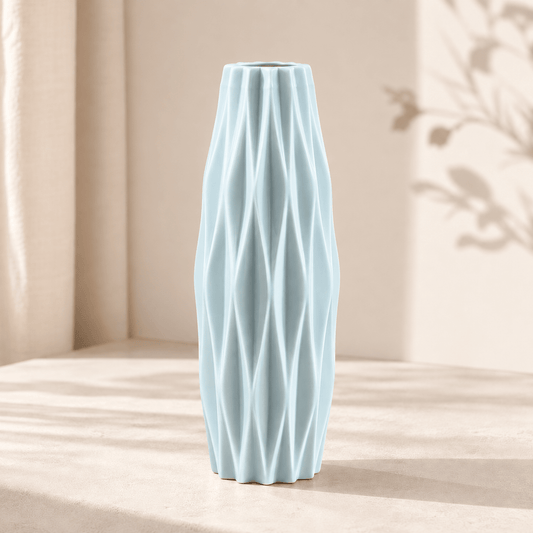
It could be an unusual ceramic object, a sculptural accent, an interesting wall hanging, or a small piece of art that makes you smile when you walk through the door.
This is often the difference between an entryway that looks styled and one that actually feels like home.
The detail doesn't need to be expensive. It simply needs to feel intentional.
A Simple Formula for a Small Entryway
If you're not sure where to start, keep it simple:
Mirror + Slim Surface + Lighting + One Decorative Accent + Smart Storage
That's enough to create a functional entryway with a polished, designer-inspired feel.
The key is resisting the temptation to add more. In a small space, every piece should earn its place.
 Make Your First Impression Count
Your entryway is the first space you see when you come home and one of the first things guests experience when they walk through the door.
It doesn't need to be large to make an impression.
Choose pieces that combine beauty with function, use your walls strategically, introduce a little texture and warmth, and leave enough breathing room for the space to feel effortless.
Because the most stylish small entryways aren't the ones filled with the most things—they're the ones where every detail feels considered.
Continue Exploring
Find more inspiration and pieces for your space through Entryway, Storage & Organization, Lighting, and small apartment guide.