

A dresser with tired handles, a bathroom vanity that needs a little warmth, a kitchen that feels ready for a change: each project starts with the same question. What should you buy to make the biggest difference without letting the shopping list grow beyond your budget?
Start with what you want to keep. Then plan the hardware, lighting and finishing touches around it. Whether you need six knobs or a kitchen’s worth of pulls, a clear list helps you compare the full cost, avoid mismatched purchases and ask better questions before ordering.
Before you rule out a favorite: If the price works for one or two pieces but feels out of reach for the quantity your project needs, ask the store about quantity pricing. A custom quote may make the total more manageable.
Start with a project plan, not a cart
Describe the result in one sentence: “Give our oak dresser a softer botanical feel,” or “Make the kitchen look more consistent without replacing the cabinets.” That sentence becomes a useful filter when you find something attractive that does not serve the project.
Take a few photographs in daylight and evening light. Record the finishes that will stay: wood, paint, countertop, faucet and existing lighting. Choose one main direction for the new details, such as warm metal with simple ceramics, rather than trying to match every item exactly.
- Keep: furniture, cabinetry and useful accessories you already enjoy.
- Change: the details that will make the most noticeable or practical improvement.
- Measure: mounting holes, available surfaces and clearance around moving doors or drawers.
- Budget: the complete project, including samples, supplies and any installation help.
- Schedule: when everything must arrive, with time to inspect and fit it.
Keep a little room in the budget for small necessities. A different screw length or an extra piece should not force you to abandon the finishing touches you planned.
Small project: give a dresser or nightstand a fresh point of view

A furniture refresh is a good place to try a more expressive detail. Sculptural knobs or botanical pulls can change the character of a plain dresser while its familiar wood or painted finish stays in place.
Count individual pieces, then check the fit
Count the hardware itself, not just the drawers. A dresser with six drawers and two knobs on each needs twelve knobs. Check whether the listing price covers one piece or a pack, and calculate the number of packs required.
When reusing existing holes, record the mounting pattern and exact center-to-center spacing for pulls. Check the overall footprint too: new hardware may expose marks left by the old pieces. Our Cabinet Knobs & Pulls Buying Guide covers measuring, proportions and finishes in more detail.
Let the hardware lead the styling
If the handles are decorative, keep the top of the dresser simple. A small tray for everyday belongings and one vase may be enough. On a nightstand, choose a lamp that leaves space for a book and a glass of water, checking its dimensions and how you will reach its switch.
You do not need to purchase every accent at once. Fit the hardware first, live with the change, and then decide whether a new lamp or catchall would add something useful.
Dresser shopping checklist: exact hardware count; mounting measurements; finish and dimensions; a sample or small pack to test; one useful tabletop accent; lighting only where needed.
Medium project: bring a bathroom vanity together

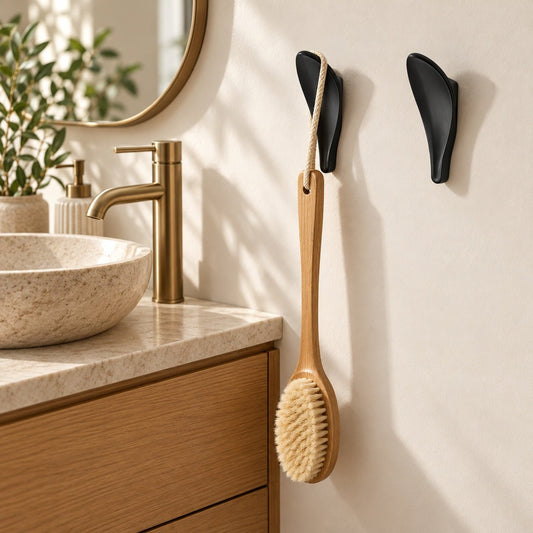
A bathroom update asks you to consider several nearby surfaces at once. Hardware sits beside the faucet, mirror, countertop and lighting, so begin with those fixed elements before choosing the smaller pieces.
Give each finish a clear role
You can echo an existing metal or introduce a second tone deliberately. For example, warm hardware might connect with a mirror frame while the faucet remains silver-toned. Compare actual finishes in the room where possible; two products described as “brass” may have different colors and levels of shine.
Check how handles feel and whether they clear adjacent doors, walls and drawers. Read the selected hardware’s care guidance and suitability for the setting rather than assuming every decorative finish behaves the same way around moisture.
Shop for everyday routines
Choose finishing touches around what happens at the sink: somewhere for soap, a place for a hand towel, and storage for the things you use daily. Measure the space beside the basin before buying a dish or organizer. Leave enough room to clean the surface easily.
Lighting belongs in the plan early if it is changing. Check the fixture’s suitability for its intended bathroom location and confirm installation requirements with your installer before ordering. Decorative accessories can wait until the practical decisions are settled.
Browse the Bathroom collection for smaller details, choosing pieces by their dimensions and care requirements as well as their appearance.
Bathroom shopping checklist: door and drawer hardware counts; existing fixture finishes; clearance; care guidance; measured countertop space; useful storage; lighting requirements and installation timing.
Larger project: plan a kitchen refresh as one order

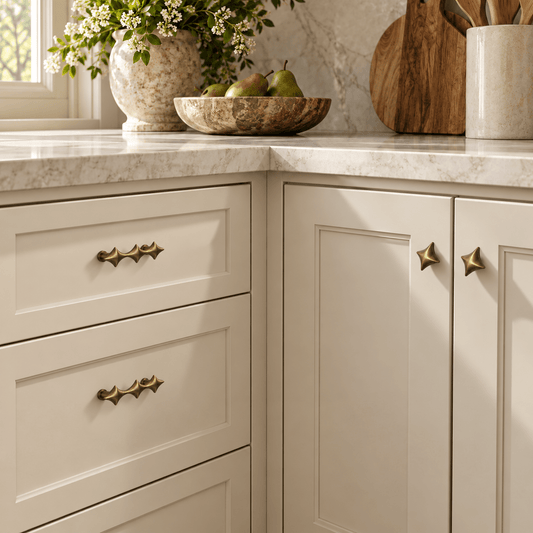
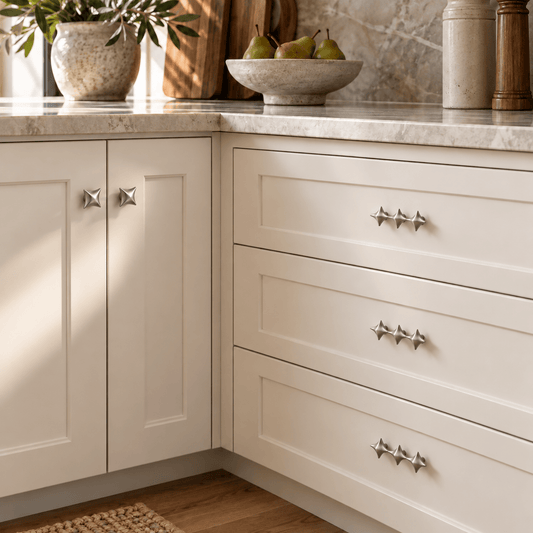
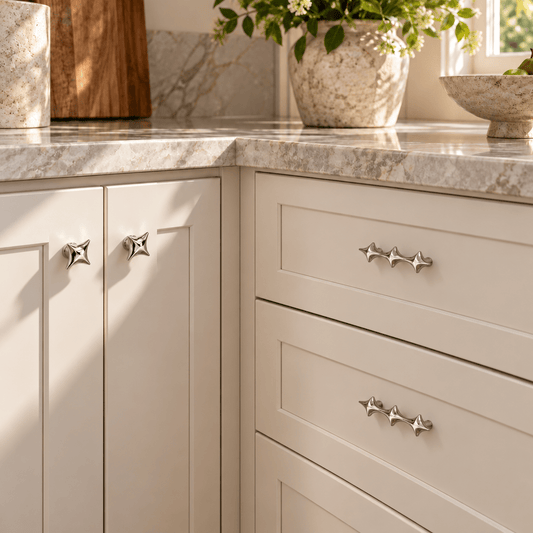
Kitchen purchases multiply quickly. A small difference in the price per handle becomes more noticeable across twenty or thirty pieces, and buying in stages can make it harder to keep the finishes consistent.
Make a door-and-drawer inventory
Work around the room in one direction and record each cabinet bank. Separate doors from drawers, then note the hardware type, mounting measurements and number of pieces needed. Include the island, pantry and any cabinets away from the main run.
For example, fourteen doors needing one knob each and eight drawers needing one pull each require fourteen knobs and eight pulls. If two wide drawers will use two pulls apiece, the pull total becomes ten. This is why a room photograph alone is not enough for an accurate quote.
Order a sample or small pack before the full purchase when practical. Test the finish beside your cabinets, check the grip and opening clearance, and look at the proportions from across the room. Ask whether the remaining quantity can be supplied together, and confirm availability again when you are ready to order.
Prioritize the repeated details
Hardware appears throughout the room, so it can establish the direction for the rest of the refresh. You might repeat one finish across the kitchen or use a related knob and pull combination, keeping the layout consistent.
Then choose a few useful finishing touches: a spoon rest near the cooking area, fresh tea towels, or an organizer that fits the space you actually have. Preserve preparation surfaces. If you want a tabletop lamp on a dry sideboard or coffee station, check the footprint, outlet access and cord route before adding it to the list.
Explore Cabinet Knobs & Pulls for the repeated detail, then the Kitchen collection for the smaller pieces that support daily use. Consider Lighting where an additional light has a clear purpose.
Kitchen shopping checklist: complete cabinet inventory; quantities by type and size; sample approval; full-order quote; availability and delivery timing; installation supplies; a short list of functional finishing touches.
Ask about quantity pricing before giving up on a favorite
A product page usually shows the price for the listed piece or pack. That is a useful starting point, but it is worth asking whether a store can quote for your exact project quantity.
Be specific. “Could you quote for eighteen pulls in this finish and size?” gives the store more to work with than “Do you offer discounts?” Send separate counts if you need a combination of knobs and pulls. The opportunity depends on the product and order, so ask for a total rather than assuming a particular discount percentage.
Urban Alcove can prepare custom project quotes when you need a set number of pieces. If you find hardware or coordinating items you love but the listed price adds up beyond your budget, contact us at support@urbanalcove.com. Tell us what you need and we can check the available quantity pricing for your project.
Compare quotes on the same basis: identical product, size, finish, number of individual pieces, delivery destination and included costs. A lower pack price is only useful if it supplies the right quantity and specification.
A flexible timeline may open up a better quote
If you do not need your order for another four weeks to two months, say so when you request pricing. Extra lead time can sometimes let a store consider more economical shipping or sourcing arrangements, which may reduce the quoted total.
Tell the store your latest acceptable arrival date, rather than simply saying you are not in a hurry. Ask whether there is a lower-cost option that fits that date and what delivery estimate applies. Longer lead time creates an opportunity to investigate; it does not automatically guarantee a lower price.
At Urban Alcove, include that flexibility in your project inquiry so we can check the options. A custom quote will need to confirm the products, quantities, price and expected timing. Leave room to inspect the order before installation, especially if other work depends on the pieces arriving.
Your project quote checklist
Copy these details into your message to make the conversation easier:
- Project: dresser, vanity, kitchen or another space.
- Product links or names: include each item you want quoted.
- Options: finish, color, hardware type and size or hole spacing.
- Exact quantities: individual pieces needed for each option.
- Delivery location: country and ZIP or postal code.
- Timing: preferred arrival date, latest acceptable date and any flexibility.
- Budget: an approximate target, if you have one.
“I’m updating a bathroom vanity and need eight knobs and four pulls in the same finish. Here are the product links and sizes. Delivery is to [country and postal/ZIP code], and I can allow six to eight weeks. Could you prepare a project quote?”
A successful refresh comes from choosing the pieces that work together and fit the way you use the room. Start with your measurements and quantities, test the detail that repeats, and give the finishing touches a practical job. When you are ready to price the whole project, email support@urbanalcove.com with your list.