Modern organic decor brings together the clean simplicity of contemporary design and the warmth of the natural world. The result is a home that feels polished without feeling formal, minimal without feeling cold, and relaxed without looking unfinished.
It is also a flexible style. You do not need exposed beams, enormous windows, or an all-neutral home to make it work. A few thoughtful choices in color, material, shape, lighting, and scale can give almost any room a calmer, more grounded feeling.
Here is how to create a warm, natural home that feels modern, comfortable, and distinctly yours.
What Is Modern Organic Decor?
Modern organic style starts with a streamlined foundation: uncluttered layouts, practical furniture, simple silhouettes, and enough open space for each piece to breathe. Natural materials, tactile surfaces, softened shapes, and earthy color are then layered in to keep that clean foundation from feeling stark.
Unlike strict minimalism, modern organic decor is not about removing every decorative object. It is about choosing fewer pieces with more visual and tactile character.
A room might combine a curved cream sofa, a light wood table, a woven rug, a sculptural ceramic vase, and a warm lamp. None of those elements needs to be dramatic on its own. Together, their contrasting textures and related colors create depth.
1. Begin With a Warm Neutral Foundation
The easiest starting point is a quiet base of warm white, cream, oatmeal, sand, taupe, or pale gray. These colors reflect light and create a calm backdrop for natural materials.
The important word is warm. A cool white room filled with hard surfaces can feel clinical. Creamier wall colors, warm-toned woods, and softly textured textiles make the same clean space feel comfortable and lived in.
You do not need to make the entire room beige. Muted olive, clay, rust, charcoal, soft brown, and dusty blue can all work as grounding accent colors. Choose one or two and repeat them sparingly so the room feels connected.
2. Mix Natural Materials
Wood is often the visual anchor of a modern organic room, but the style becomes richer when several natural-looking materials appear together. Try pairing warm wood with woven fiber, linen, cotton, ceramic, stone, glass, or softly aged metal.
Contrast matters more than perfect matching. Smooth ceramic beside a rough woven basket creates interest. A soft linen pillow balances the harder surface of a wood table. A matte stone bowl gives a simple shelf a more tactile quality.
If you are not sure where to begin, introduce natural material through smaller pieces before investing in larger changes. A lamp, tray, vase, pillow cover, or wall hanging can shift the feeling of the room without requiring a full redesign. Our Natural & Woven collection is designed around this kind of easy texture.

3. Layer Texture Instead of Adding Clutter
A restrained room still needs variation. Without texture, a neutral palette can look flat; with too many small accessories, it can start to feel busy. Texture provides a useful middle ground.
Layer a woven pillow against a smoother fabric. Place a matte vessel on a wood surface. Add a rug with visible natural texture beneath simpler furniture. Introduce a softly rumpled linen throw rather than another decorative object.
A useful rule is to vary the surface, scale, and shape of adjacent pieces. If everything is smooth, add something woven. If every object is small, introduce one larger accent. If the room is dominated by straight lines, bring in a curve.
The goal is not to use every natural material at once. Three or four related textures repeated throughout the room are usually enough.
4. Choose Soft, Organic Shapes
Modern interiors often rely on clean lines, but too many sharp edges can make a room feel rigid. Rounded and irregular shapes soften the overall look.
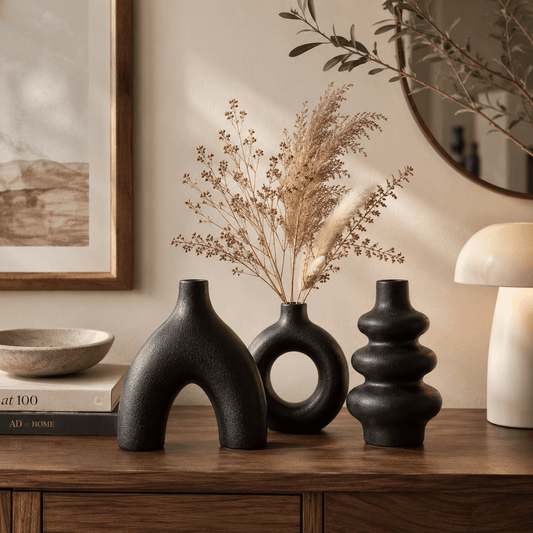
Consider a curved lamp, a round or organically shaped mirror, a gently arched wall accent, a bulbous ceramic vase, or a coffee table with softened corners. Even botanical branches bring a naturally irregular silhouette into the room.
You do not need to replace rectangular furniture. One or two curved elements can balance it. The contrast between structure and softness is part of what makes modern organic spaces feel contemporary rather than rustic.
5. Let Lighting Warm the Room
Lighting is one of the most important—and often overlooked—parts of modern organic decor. A single bright overhead fixture can flatten texture and make a neutral room feel stark.
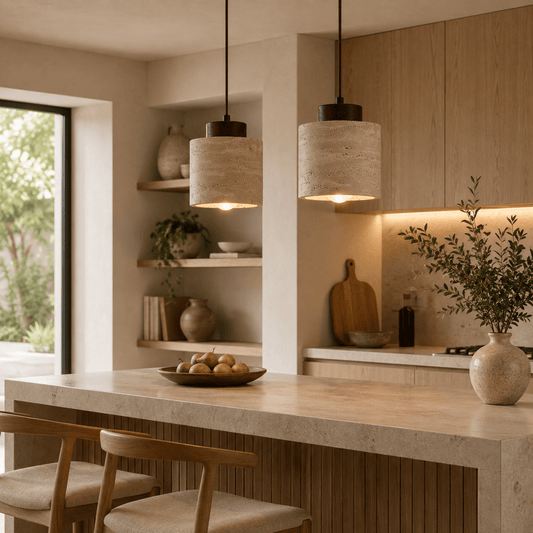
Instead, create layers. Combine general room lighting with a table lamp, floor lamp, wall light, or pendant placed where it serves a practical purpose. Warm light brings out the grain in wood, the variation in woven fiber, and the depth of matte ceramic surfaces.
Fixtures can also add texture when they are turned off. Look for linen-like shades, woven details, natural stone effects, warm metal, paper-inspired forms, or sculptural ceramic bases. Explore the Lighting collection for pieces that provide atmosphere as well as visual interest.

6. Add Earthy Color With Restraint
Modern organic rooms are often neutral, but they should not feel colorless. Shades drawn from landscapes work naturally with wood and woven materials.
Muted olive can appear in a pillow or botanical branch. Clay and terracotta add warmth through ceramics or textiles. Charcoal gives a pale room definition through a lamp, frame, or small decorative object.
Repeat an accent color two or three times instead of introducing many unrelated shades. The repetition creates rhythm while keeping the room calm.
7. Bring Nature In Thoughtfully
Greenery is a natural fit, but more is not always better. One substantial plant or a simple leafy branch can have more impact than several small pots scattered across every surface.
Choose placement based on the room. A taller plant can soften an empty corner. A branch can add height to a console. A small piece of greenery can bring life to a shelf or bedside table.
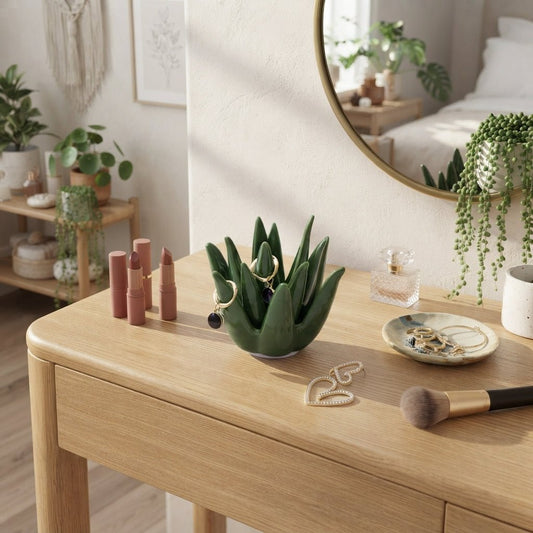
If maintaining live plants is not practical, a restrained botanical element can still provide organic shape and color. The effect comes from the visual connection to nature, not from filling the room with greenery.
8. Use Wall Decor to Add Character
A warm neutral wall creates breathing room, but it should not feel forgotten. Choose wall decor that adds shape, texture, or a personal point of view.
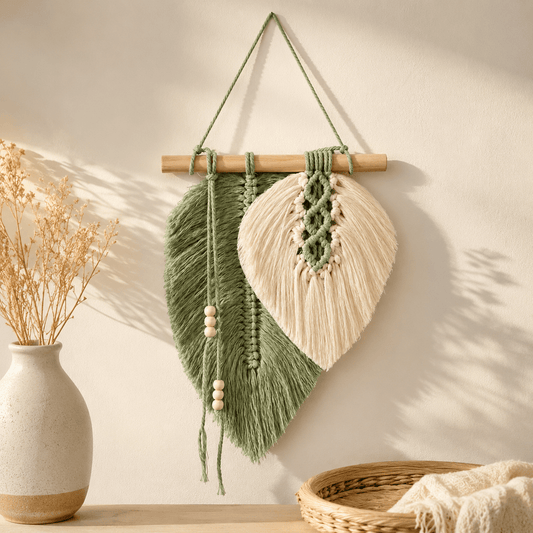
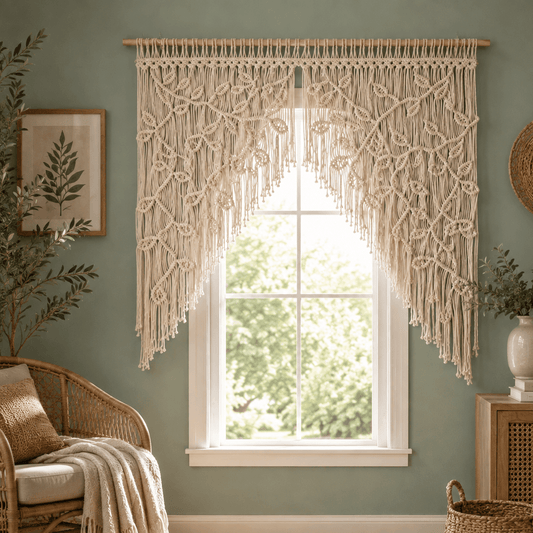
A woven hanging introduces softness. An abstract print can repeat the room's earthy palette. A sculptural accent creates shadow and dimension as the light changes. A mirror can reflect natural light and make a smaller room feel more open.
Give wall pieces enough surrounding space. One well-scaled focal point often feels more confident than a collection of undersized decorations. Browse Wall Decor for pieces that add interest without overwhelming the room.
9. Keep Everyday Life in the Design
A beautiful room still needs to work. Modern organic style is most convincing when practical objects are chosen and arranged with the same care as decorative ones.
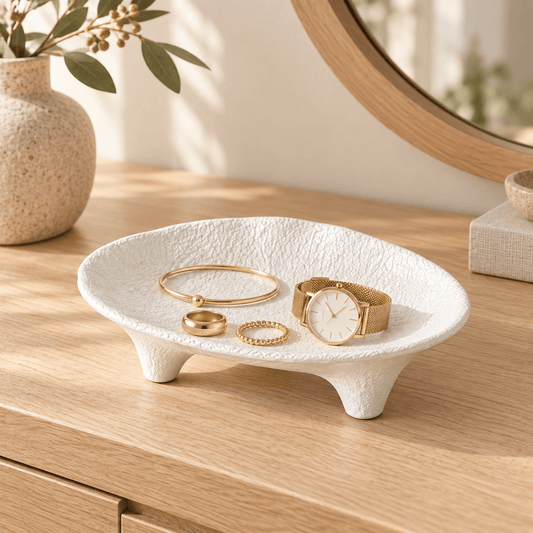
Use a textured tray to contain keys, a woven basket to hold loose items, or a decorative bowl for things you reach for every day. Choose lighting based on where you read, work, or relax. Leave clear walking paths and avoid filling every available surface.
Functional pieces can be beautiful, and decorative pieces can sometimes do useful work. That balance helps the room feel lived in rather than staged.
10. Carry the Style From Room to Room
You do not need to repeat the same furniture or accessories everywhere. Instead, repeat the principles: warm neutrals, natural materials, tactile contrast, softened shapes, useful lighting, and intentional editing.
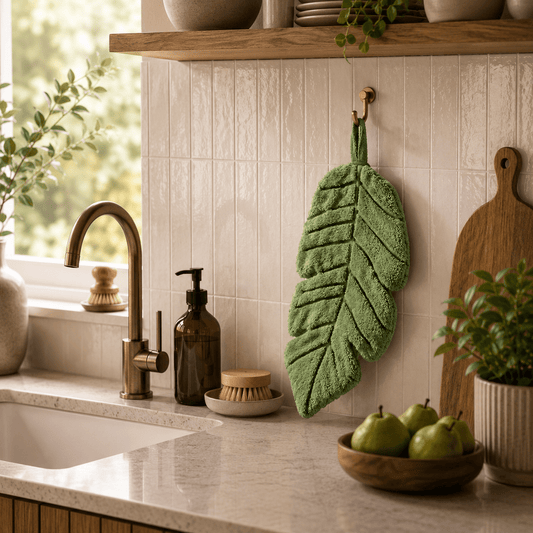
In an entryway, that might mean a wood surface, an organic mirror, a ceramic catchall, and warm light. In a bathroom, it could be woven storage, soft textiles, natural-looking stone, and a restrained palette. In a bedroom, linen layers, warm wood, and a softly shaped lamp can create a restful version of the look.

A Simple Modern Organic Formula
If you want an easy place to begin, use this combination:
Warm neutral base + natural wood + one woven texture + one soft textile + an organic shape + warm layered lighting + a restrained earthy accent
Start with what you already own and add only what the room is missing. Often, changing the lighting, introducing one tactile material, and removing a few distracting objects will have more impact than buying an entirely new set of decor.
Common Mistakes to Avoid
- Making everything the same shade: A room needs subtle contrast to avoid looking flat.
- Using texture without editing: Too many woven pieces or rustic finishes can pull the room away from its modern foundation.
- Forgetting practical lighting: Atmosphere matters, but each area should still support how you use it.
- Buying complete matching sets: Modern organic spaces feel richer when pieces relate without being identical.
- Filling every surface: Open space allows natural materials and sculptural shapes to stand out.
Create a Home That Feels Naturally Yours
Modern organic decor is less about following a rigid formula and more about creating balance: clean and warm, simple and tactile, polished and comfortable.
Choose a quiet foundation, layer natural-looking materials, soften the room with curves and textiles, and use lighting to bring everything to life. Most importantly, leave space for the objects and details that make the home feel personal.
Explore Urban Alcove's Modern Organic collection for pieces that bring warmth, texture, and sculptural simplicity into your space. For more ideas, read How to Bring Natural Textures Into Your Home and How to Create a Cozy Home Without Making It Feel Cluttered.