

A narrow shelf can hold more character than its size suggests. The trick is to give each piece a clear role: something that adds height, something that connects the materials, and a small detail that makes the arrangement feel like yours. Leave enough space around those pieces for their shapes to show.
Modern organic shelf styling brings together simple forms, warm wood, tactile surfaces and a little contrast. You can build the look with books and objects you already own. These three layouts show how to adapt it to a floating shelf, a bookcase and a recessed niche, without treating every empty patch as a space to fill.
Start with the shelf, then choose the objects. Measure its usable depth, width and clear height. A beautiful vase is only a good choice if its entire base fits, its widest point clears the surroundings and you can lift it out comfortably.
Three measurements to take before styling
Usable depth: Measure from the back to the front edge, allowing for any lip or trim. Check the full footprint of a bowl or vase, including a projecting handle. Keep every base fully supported and comfortably inside the edge. On a very shallow shelf, choose a slimmer object rather than letting a larger one overhang.
Clear height: Measure to the shelf above or the top of the recess. Include stems in a vase's total height, and leave room to lift and return the object. An arrangement that only just fits can be awkward to clean or change.
Working width: Decide what must remain useful. Books need room to slide out; a display shelf needs enough space to dust around the pieces. Check the shelf's stated load limit and mounting instructions before adding books, ceramics or water-filled vessels. Styling does not change what the shelf can support.
The photographs below are illustrative styling scenes, not measured plans or exact Urban Alcove product sets. The example dimensions are starting points to test with your own shelf and objects.
Choose the arrangement that suits your shelf
| Shelf | Starting arrangement | Main fit check | Space to preserve |
|---|---|---|---|
| Floating shelf | One taller grouping + one low grouping | Full object depth and any projecting stems | A visible break between the groups |
| Bookcase | Useful books + a few varied accents | Book depth, weight and removal space | Access to the books you actually read |
| Recessed shelf | One clear silhouette in each small compartment | Height, side clearance and visibility in shadow | Open background around each shape |
1. The floating shelf: balance a tall group with a low one
Best for: A single display shelf where you want a calm, finished arrangement with very few pieces.

- Place the taller shape first. Set a modest vase toward one end, with space beside it rather than pressed into a corner. Choose a rounded body or an interesting surface so it has presence even without a large bouquet.
- Add one lower companion. A small glass vessel beside the vase introduces a different finish. Keep the outlines distinct: if the smaller piece disappears behind the larger one, bring it slightly sideways rather than crowding everything toward the front.
- Balance the other end. Try two small books laid flat with one low ornament on top. The stack should be stable, fully supported and easy to remove. Leave a visible gap between this group and the vases.
For a shelf around 90 cm (35 in) wide and 18 cm (7 in) deep, begin by testing two compact groupings rather than a continuous row. A vase around 20 cm (8 in) tall can provide the taller note, provided its full width and depth fit. These proportions are an exercise, not a required ratio; use paper footprints to check your actual pieces.
The formula: Taller vase + lower contrasting vessel; open space; low book stack + one personal accent. If the shelf feels busy, remove the companion vessel before buying a different centerpiece.
Look from both the doorway and the seat where you usually see the shelf. A tiny ornament may be a lovely close-up detail while contributing very little to the room view. Let the vase do the larger visual work.
2. The bookcase: let the books lead
Best for: A narrow bookcase that needs to remain useful while feeling more considered.

Begin with the books you want to keep here. Put regularly read titles where you can reach them comfortably, with their spines facing out. Use suitable bookends where needed; a decorative vase should not have to hold a leaning row upright.
- Set the first bay. Place a short upright row on one side and a low bowl or vessel on the other. Leave room between them so the objects do not merge into one dense block.
- Change the next level. Try a small horizontal stack on the opposite side, then add a rounded vase. Avoid putting heavy décor on books you frequently pull out.
- Repeat one material lower down. Bring back cream ceramic, smoky glass or the same small metal finish in a different position. Let useful books occupy the rest of the bay.
The connection comes from repeating a few materials, not copying the same arrangement on every level. If a tall vase sits on the right in one bay, a lower form on the left in the next can help the eye move through the bookcase.
Do not hide books simply to produce a neutral photograph. A colorful spine can become the accent you repeat in a small ceramic. If the shelves are already full of books you use, begin with one display bay rather than spreading ornaments across all of them.
The formula: Useful books first; vary upright rows and low stacks; repeat two or three materials. Keep heavier contents low where appropriate and secure the bookcase according to its manufacturer's instructions.
3. The recessed shelf: give each silhouette room
Best for: A shallow niche or recessed shelf where the surrounding architecture already frames the display.

A recess adds its own edges, shadows and texture. Start with fewer objects than you would use on an open shelf. One rounded vase can be enough in a small compartment; a pair of lower vessels can occupy another.
- Choose the clearest shape. Place one vase where its outline is visible against the back. A pale vessel may show well in a darker recess, while an olive piece can add definition against cream.
- Check the view from the room. Move the piece until the niche's side does not conceal it. Keep its base inside the shelf and leave space above it. Omit stems if they obscure the arch or make the compartment feel cramped.
- Add a small counterpoint. In a second compartment, use two lower vessels with different heights. Leave the remaining background visible instead of adding a third group.
For example, if a compartment has 30 cm (12 in) of clear height, test an object nearer 20 cm (8 in) high before trying one that nearly touches the top. Actual clearance depends on the object's shape and how you lift it out. A cardboard outline can help you judge the silhouette before moving fragile pieces.
The formula: One strong silhouette + visible background. Let the recess provide the drama, and use a second small grouping only when there is comfortable room.
Choose materials that do different jobs
Wood contributes warmth and grain. Ceramic brings a solid shape, whether its finish is matte or glazed. Glass can make an arrangement feel lighter. A small warm metal detail adds contrast without needing to dominate the shelf. You do not need all four materials in every group.
Use the shelf's existing finish as your starting point. On oak, try cream ceramic and one olive or smoky accent. On a dark shelf, begin with a lighter vessel so its outline remains visible. Repeat an existing room color in one object, then step back before adding more.
For a textured option, Marina's jute-wrapped glass combines a clear vessel with a woven rope pattern. Check the chosen size and allow for its decorative handle when testing the footprint. One textured piece can supply enough variation beside simple books and a plain ceramic.
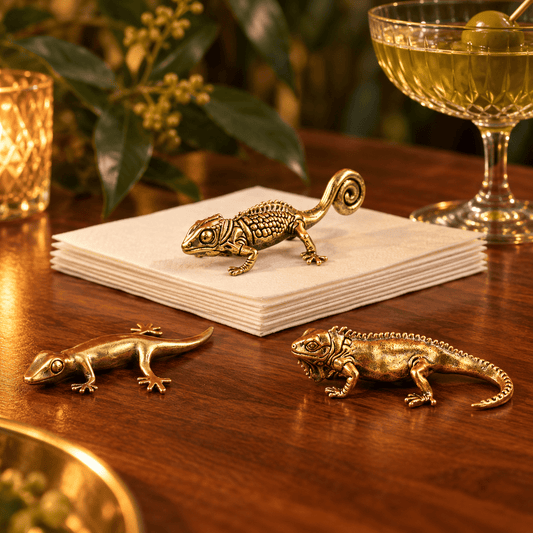
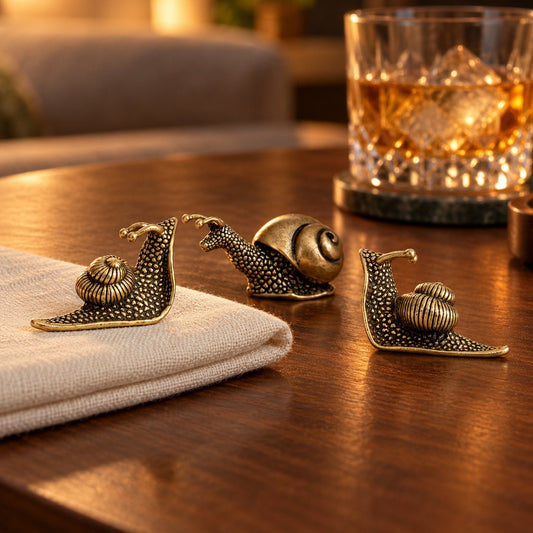
For a personal finishing detail, Little Wild miniature copper lizards have an antique brass finish and measure approximately 6.2–6.5 cm (2.4–2.6 in) long, depending on the design. Their scale suits a close-view shelf beside books. Let a larger object establish the arrangement, then use a miniature as the detail someone notices afterward.
For more help comparing shapes and display scale, see our Vase Buying Guide and Small Figurines Buying & Styling Guide. The broader Modern Organic Decor guide explains how to carry these materials into the rest of the room.
A shelf feels personal when the objects have a reason to be there—and enough room to be seen.
A final five-minute shelf edit
- Every base fits fully on the shelf, with room inside the front edge.
- Vases, handles and stems clear the sides and shelf above.
- Books remain easy to reach and remove.
- Each grouping has a distinct taller or lower shape.
- A few colors or materials connect the groups.
- Small details are visible from where you enjoy them.
- You can lift the objects and dust without dismantling the entire display.
Take a quick photograph from your usual viewing spot. If the arrangement feels crowded, remove one object and compare the two versions. If it feels flat, change a height or surface finish before adding more pieces.
Start with the layout that matches your shelf. Then explore our Modern Organic collection for a specific missing shape or texture. The most useful addition is one you have already made room for.