

A small coffee corner can make an everyday kitchen feel more considered. You do not need a spare room or a long stretch of countertop—just a place to prepare your drink, keep a few essentials close and put everything away again. These four layouts help you find that place without crowding the kitchen.
Start with how you actually make coffee. A compact machine, a pour-over brewer and a French press need different amounts of room. Choose the layout that supports your routine, then add a mug you love, a little texture and one useful finishing detail.
Start here: Clear the proposed spot and make one complete drink there before buying storage or décor. Notice where you refill water, reach for a spoon and set down the finished cup.
Measure the routine, not just the machine
Measure width, depth and height, including handles, cords, open lids and removable water tanks. Leave room to fill, clean and move the equipment. For powered appliances, follow the manufacturer’s instructions for ventilation, overhead clearance and outlet placement; there is no single clearance that suits every machine.
- Preparation: Can you set down a mug and prepare your drink without borrowing the main cooking surface?
- Reach: Can you pick up a mug without stretching over hot equipment?
- Reset: Is there a simple place for beans, filters and the items you use daily?
- Movement: Do doors, drawers and walking routes stay clear?
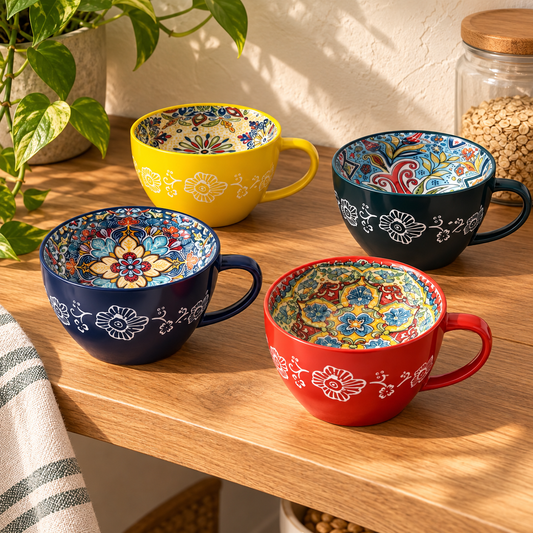
Use a sheet of paper or removable tape to mark the footprint. A generous mug deserves a generous spot: Fiora measures approximately 5.9 inches across including its handle. Check both the base and the overall width when choosing a coaster, shelf or tray.
1. The counter corner: keep the working space open
Best for: A daily coffee routine with equipment that already belongs on the countertop.

Choose a corner that is easy to reach and does not interrupt food preparation. Place the machine where its tank, lid and controls remain accessible. Keep a mug and a small container of coffee nearby; store spare mugs and bulk supplies elsewhere.
A tray can gather loose accessories, but avoid placing a machine on a decorative tray unless the surface and appliance instructions allow it. Let the coffee corner stay small enough to wipe clean in one pass.
- Keep the front edge free for the cup you are using.
- Limit the display to daily essentials and one decorative detail.
- Check that upper cabinets do not interfere with steam or maintenance.
2. The narrow shelf: move storage upward
Best for: A tiny countertop with suitable wall space above it.

Use the shelf for mugs, a closed coffee container and a small stack of filters. Keep the brewer and the space for pouring below. This arrangement adds storage without turning every inch of countertop into a display.
Measure the full mug, including its handle, against the shelf depth. Position items away from the edge and mount the shelf with fixings appropriate to the wall and its intended load. An attractive shelf is useful only when the contents are easy to reach.
Leave a little breathing room between objects. One colorful mug against pale wood can provide enough interest; you do not need a row of accessories. Keep powered appliances off a decorative storage shelf.
3. The cabinet nook: give supplies a home
Best for: A kitchen with an existing open niche or a cabinet that can become accessible coffee storage.

Arrange the frequently used items at a comfortable height, with refills above or below. Keep the work surface clear enough to lift the brewer and set down a cup. Make sure open doors do not block an adjoining drawer or the route through the kitchen.
Treat an enclosed cabinet as storage first. For an electric coffee machine or kettle, confirm that the manufacturer permits the proposed location and that ventilation, heat, moisture and electrical requirements are met. If it is unsuitable, brew on the countertop and return the cool, dry accessories to the nook afterward.
A manual brewer and a few neatly stored essentials can create the same sense of order without filling the cabinet with equipment.
4. The movable station: borrow a little floor space
Best for: A kitchen with very little counter space and a clear spot for an existing compact cart.

A small cart can hold a manual brewer, mugs and coffee supplies near the kitchen. Measure the cart’s entire footprint, including handles and wheels, and check its position with nearby doors open.
Keep heavier supplies low and leave the top uncluttered. Park it on a level surface and lock the wheels, where fitted, before pouring. Move the cart when cups are empty and equipment is cool; carry finished drinks separately.
Manual brewing keeps this layout straightforward. If you want powered equipment, check the cart’s suitability and the appliance instructions, and avoid a cord crossing a walkway. Choose the station because it makes the routine easier, not because it holds more accessories.
Choose a few finishing touches that earn their space
Repeat two or three materials—perhaps porcelain, wood and woven texture—so the corner feels connected to the kitchen. Indigo Loom coasters add a blue textile accent. Each measures 3.94 inches square; check your mug’s base for a comfortable fit. They have no separate backing and should not be treated as waterproof mats or hot-pan trivets.
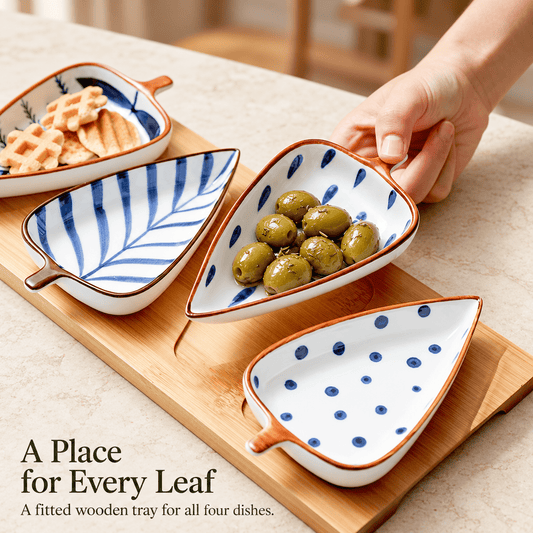
For an occasional pastry alongside your drink, Folia’s wooden leaf serving tray adds an organic shape. Put it away between uses if the counter is tight. Browse Kitchen & Table for useful pieces, then choose only what your measured space needs.
The evening reset: Wash the used mug, put away the brewer, wipe the surface and refill tomorrow’s essentials. A corner that resets easily is more likely to stay inviting.
A Thoughtful Gift for Their Coffee Ritual
For someone who enjoys a slow coffee or tea break, a distinctive mug is a personal starting point. Fiora’s colorful porcelain design and generous 16+ oz capacity suit someone who likes a larger cup. Indigo Loom’s six woven coasters offer a complementary touch of blue for the table.
Choose the mug design around their tastes and check that the pieces suit how they drink and the space they have. These are separate products rather than a packaged gift set; items ordered together may arrive separately. Explore Home Decor Gifts for more ideas.
Make your smallest useful change first
Pick one layout, clear its surface and try your morning routine. Add storage only where the test reveals a need. The best coffee corner is the one that leaves your kitchen comfortable to use and makes your daily pause feel a little more yours.
For more help, read our ceramic mug buying guide, guide to kitchen décor without countertop clutter and home décor gifting guide.